25 May 2026 | Monday | Analysis
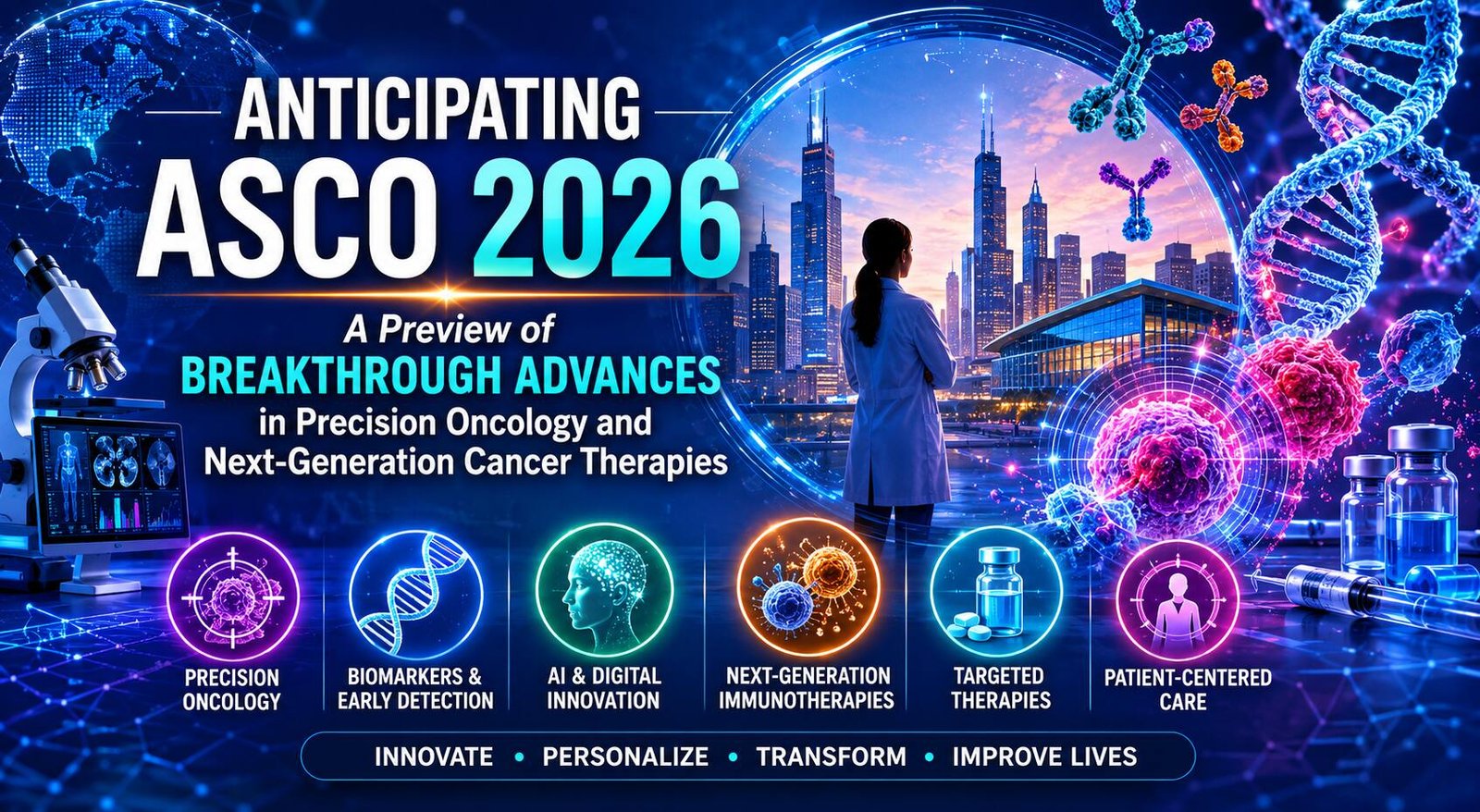
The American Society of Clinical Oncology (ASCO) 2026 Annual Meeting, scheduled for May 29–June 2, 2026, in Chicago, is poised to unveil unprecedented advances in cancer therapeutics and precision medicine. Based on advance abstracts and company announcements, the meeting will feature groundbreaking presentations from pharmaceutical giants, innovative biotechnology firms, and world-leading academic cancer centers—all demonstrating remarkable momentum in multi-omic biomarker research, bispecific antibody engineering, DNA damage response mechanisms, and real-world evidence generation. This pre-meeting analysis examines the key presentations, clinical trials, and research findings that will shape conversations on the ASCO 2026 floor and redefine oncology practice for years to come.
With less than a week until the opening sessions, ASCO 2026 promises to be a watershed moment in cancer therapeutics. Leading presentations will showcase strategies for overcoming immunotherapy resistance, novel mechanisms for exploiting DNA damage vulnerabilities, comprehensive multi-omic profiling approaches identifying previously unknown biomarkers, and sophisticated real-world evidence demonstrating that precision medicine benefits can extend beyond select academic centers. More than a dozen major pharmaceutical and biotechnology companies are scheduled to present data spanning melanoma and non-small cell lung cancer to glioblastoma and triple-negative breast cancer—with particular emphasis on treating previously intractable tumor types and managing patients resistant to current standard-of-care approaches.
The convergence of advances expected to be presented suggests that oncology is entering a transformative era: moving from single-agent therapy to rationally designed combinations, from biomarker-agnostic treatment to comprehensive molecular profiling, and from academic-only precision medicine to broadly accessible, equitable approaches benefiting diverse patient populations globally.
Caris Life Sciences emerged as a flagship presenter with 32 studies across multiple tumor types and therapeutic modalities. This unprecedented breadth represents the convergence of comprehensive molecular profiling, artificial intelligence, and real-world data analytics—hallmarks of next-generation precision medicine.
Multi-Omic Biomarker Characterization Across Tumor Types
Caris's portfolio encompassed fundamental discoveries that challenge conventional understanding of cancer biology. Notably, research examining mitochondrial DNA (mtDNA) expression in colorectal cancer identified distinct metabolic and immune states, suggesting that energy metabolism signatures may predict immunotherapy responsiveness. This work bridges systems immunology with traditional oncology, opening new avenues for patient stratification.
The studies on distinct late recurrence patterns in HER2-positive invasive lobular carcinoma (ILC) provide critical insights into a frequently overlooked breast cancer subtype. By integrating data from the NCCTG N9831 (Alliance) trial with real-world cohorts, researchers identified that ILC exhibits fundamentally different immune landscapes compared to ductal carcinomas, with implications for CDK4/6 inhibitor selection and duration of treatment.
Genomic Ancestry and Mutational Signatures
One particularly innovative presentation examined how genetic ancestry influences ultraviolet (UV)-related mutational signatures in melanoma and their association with immunotherapy response. This work directly addresses health disparities in cancer precision medicine—a critical gap in current practice where biomarker-driven therapies have predominantly benefited populations of European ancestry.
Emerging Resistance Mechanisms to Established Therapies
The identification of ESR1 amplification as a distinct genomic subtype associated with reduced survival and decreased benefit from CDK4/6 inhibitor therapies represents a paradigm-shifting discovery. This finding suggests that hormone receptor-positive breast cancer previously classified as "CDK4/6 inhibitor-responsive" may require alternative therapeutic strategies based on specific ESR1 copy number alterations—a finding with immediate clinical implications for treatment selection.
Caris's emphasis on real-world data represents a critical evolution in oncology research. Rather than relying solely on controlled clinical trials, the integration of extensive clinico-genomic databases spanning multiple institutions enables identification of biomarkers in unselected patient populations. Studies on treatment outcomes following BRCA1, BRCA2, and PALB2 mutations in hormone receptor-positive breast cancer receiving systemic therapies provide real-world validation of genetic risk stratification.
Collaboration Networks and Global Scope
Notably, Caris's studies represent collaborations across 60+ institutions globally, including major cancer centers (Dana-Farber, Mayo Clinic, Memorial Sloan Kettering, National Cancer Institute) and international research consortia. This distributed research model accelerates biomarker discovery and clinical translation while generating evidence in diverse patient populations.
The ASCO 2026 presentation of GLIX1 by BioLineRx and Hemispherian AS represents a fundamentally novel approach to cancer therapeutics—targeting the DNA damage response through Ten-Eleven Translocation 2 (TET2) reactivation.
Glioblastoma, despite being the most common primary brain tumor, remains profoundly treatment-resistant. The standard of care established in 2005—surgery, radiotherapy, and temozolomide (TMZ)—has not substantially improved over two decades. Critically, patients with unmethylated MGMT promoter status (>50% of GBM cases) demonstrate limited TMZ responsiveness.
GLIX1 addresses a fundamental vulnerability in cancer cells: aberrant DNA hypermethylation resulting from TET2 suppression. TET2 enzymes catalyze 5-methylcytosine oxidation to 5-hydroxymethylcytosine (5hmC), a critical step in DNA demethylation. When TET2 activity is lost—a frequent event in cancer—tumors accumulate abnormal methylation patterns that support malignant phenotypes.
By reactivating TET2, GLIX1 restores DNA demethylation capacity, triggering base excision repair and generating single-strand DNA breaks that accumulate into lethal double-strand breaks. The mechanism appears tumor-selective, as cancer cells become exquisitely vulnerable to DNA damage when simultaneously losing homologous recombination capacity.
The preclinical studies presented demonstrate remarkable promise:
The Phase 1/2a study reflects sophisticated clinical trial design incorporating both monotherapy and combination approaches. Part 1 focuses on dose escalation in patients with recurrent/progressive GBM and high-grade gliomas (target enrollment: ~30 patients), with primary objectives of establishing maximum tolerated dose and preliminary efficacy. Notably, Part 2 expansion includes newly diagnosed GBM, other solid tumors, and combination strategies with PARP inhibitors—a scientifically sound approach based on mechanistic complementarity.
The presentation of GLIX1 plus PARP inhibitor combinations demonstrates strategic thinking in therapy design. PARP inhibitors function by blocking repair of single-strand DNA breaks, a mechanism particularly effective in homologous recombination-deficient tumors. However, many "HR-proficient" cancers show limited PARP sensitivity.
GLIX1, by generating abundant single-strand breaks through TET2-restored DNA demethylation, theoretically overcomes this limitation. The synergistic preclinical data across diverse cancer cell lines with multiple PARP inhibitors suggests a class effect—meaning combination efficacy transcends individual PARP inhibitor characteristics. This approach may expand PARP inhibitor utility to previously unresponsive tumor types.
Innovent Biologics presented compelling data on IBI363, a PD-1/IL-2 bias bispecific fusion protein, marking a significant evolution in checkpoint inhibitor design.
Traditional anti-PD-1 monotherapy works by blocking interaction between PD-1 (on T cells) and PD-L1 (on tumor cells), relieving T-cell exhaustion. However, the approach has fundamental limitations: some tumors remain refractory to PD-1 blockade alone, and clinical benefit varies substantially across patient populations.
IBI363 employs a "bias bispecific" architecture, simultaneously engaging PD-1 while delivering IL-2 signaling. Critically, the bispecific is engineered with preferential IL-2 receptor activation in effector T cells while minimizing IL-2 effects on regulatory T cells (Tregs). This selectivity is crucial: IL-2 signaling non-specifically activates both anti-tumor and immunosuppressive cells, and previous unconditional IL-2 approaches faced limitations due to Treg expansion.
The presentation of preliminary proof-of-concept (POC) data in patients with advanced non-small cell lung cancer (NSCLC) receiving IBI363 combined with standard chemotherapy as first-line treatment demonstrates encouraging efficacy. This positioning—combining with chemotherapy rather than as monotherapy—reflects current understanding that chemotherapy-induced immunogenic cell death synergizes with checkpoint inhibition.
Equally impressive were data in immunotherapy-resistant NSCLC patients. A substantial clinical problem in oncology is managing patients who progress on or become refractory to standard anti-PD-1/PD-L1 therapy—a population historically considered "treatment-refractory" with limited options. The demonstration of robust survival benefits in this population represents a meaningful clinical advance, suggesting that selective IL-2 signaling through bispecific engagement overcomes some resistance mechanisms.
Innovent's IBI363 program exemplifies the strategic expansion of immunotherapy beyond simple checkpoint blockade. By combining two mechanistically complementary signals (PD-1 blockade plus biased IL-2 activation), the approach addresses immune exhaustion while simultaneously enhancing effector T-cell proliferation and activation—a rationale strongly grounded in tumor immunology principles.
MabWell's presentation of clinical data on 9MW2821 for oral and poster presentations indicates advancement of this therapeutic candidate into clinical evaluation. While detailed mechanisms were not fully specified in available materials, the presentation format and clinical trial context suggest this represents either an antibody-drug conjugate (ADC), bispecific antibody, or next-generation targeted therapy addressing previously underserved cancer populations.
Sapience Therapeutics provided a positive data update from Phase 2 evaluation of lucicebtide combined with standard of care in glioblastoma patients. This presentation, presented at ASCO 2026, indicates maturation of this therapeutic approach from early-stage development toward potential clinical utility in this devastating disease.
Accent Therapeutics' presentation of Phase 1/2 study results for ATX-295 (trial-in-progress poster) indicates advancement in early-stage development. The specific mechanistic class and target remain to be determined from full trial data, but inclusion at ASCO suggests preliminary safety/tolerability results warranting continued development.
Lunit's presentation on AI-powered immunohistochemistry (IHC) and tumor microenvironment research represents the integration of artificial intelligence into pathology-based biomarker discovery. This approach leverages machine learning to quantify and categorize immune cell infiltration patterns, stromal composition, and spatial relationships with unprecedented precision and reproducibility.
The importance of this technological advance cannot be overstated: traditional pathologist-based assessment of immune infiltration relies on subjective visual interpretation, introducing significant inter-observer variability. AI-powered IHC analysis provides standardized, quantitative metrics that can:
AbbVie announced new data at ASCO 2026 demonstrating breadth across its next-generation oncology pipeline, with multiple candidates advancing across different tumor types and therapeutic modalities. This presentation reflected AbbVie's significant investment in oncology innovation and portfolio expansion.
Eli Lilly showcased its oncology portfolio across multiple tumor types and treatment modalities, demonstrating the company's commitment to advancing therapeutics across diverse cancer types. The presentation highlighted progress in various development stages, from early-stage candidates to late-stage programs.
Boehringer Ingelheim's presentation of its oncology portfolio demonstrated strong promise across multiple cancer indications, reflecting the company's strategic focus on addressing unmet medical needs in diverse tumor types.
Servier highlighted its expanding rare oncology portfolio, addressing therapeutic gaps in less common tumor types where unmet medical need remains acute. This presentation emphasizes the growing recognition that comprehensive precision medicine approaches must address rare cancers, not merely common malignancies.
Nuvalent highlighted upcoming data presentations for neladalkib and zidesamtinib at ASCO 2026, indicating advancement of these targeted therapeutics toward clinical utility. These candidates likely represent novel kinase inhibitors or targeted therapies addressing specific driver mutations.
Formosa Pharmaceuticals announced presentation of TSY-310 at ASCO 2026, indicating progress in this therapeutic development program.
Canopy selected studies for oral and poster presentations at ASCO 2026, demonstrating advancement of their research programs and clinical development efforts.
Rutgers Cancer Institute and RWJBarnabas Health highlighted advances shaping the future of cancer research, reflecting the critical role of academic cancer centers in translating discoveries into clinical advances.
A dominant theme across ASCO 2026 presentations is comprehensive molecular profiling incorporating:
This convergence of multi-dimensional data enables patient stratification with unprecedented resolution, moving beyond single-gene mutations toward comprehensive tumor and immune landscape characterization.
The prominent emphasis on real-world data represents a paradigm shift in oncology research. Rather than relying solely on highly selected clinical trial populations, integration of broad patient cohorts enables:
A striking number of presentations focused on understanding therapeutic resistance—why some patients respond dramatically while others show minimal benefit, and what mechanisms drive treatment failure. This focus reflects maturation of the field: having achieved significant benefits with checkpoint inhibitors, targeted therapies, and hormone-directed approaches, the critical remaining challenge is overcoming primary and acquired resistance.
Key resistance mechanisms being investigated include:
Rather than relying on single-agent approaches, ASCO 2026 presentations emphasize rationally designed combinations targeting complementary mechanisms:
While precision oncology has historically been accessible primarily at major academic centers, ASCO 2026 presentations emphasize expanding access:
The presentations at ASCO 2026 have several immediate implications for clinical oncology practice:
Over the next 2-3 years, we anticipate:
Over 5-10 years, ASCO 2026 presentations suggest several fundamental changes in oncology practice:
The ASCO 2026 Annual Meeting represents a watershed moment in cancer therapeutics. The convergence of multiple trends—comprehensive multi-omic profiling, sophisticated biomarker discovery, novel mechanisms of action (TET2 reactivation, biased bispecific IL-2), improved management of therapy-resistant disease, and emphasis on real-world evidence generation—indicates that oncology stands on the threshold of a new era.
Previous decades of cancer research generated remarkable advances: targeted therapies for BCR-ABL–positive leukemias, EGFR-mutant lung cancers, and HER2-positive breast cancers; checkpoint inhibitors revolutionizing immunotherapy; and hormone-directed therapies extending life in breast and prostate cancers. Yet for many patients, disease progression and therapeutic resistance remained inevitable.
ASCO 2026 presentations suggest that future approaches will address these limitations through:
For patients living with cancer, these advances translate to hope. A glioblastoma patient might benefit from TET2 reactivation. A patient who progressed on checkpoint inhibitors might respond to PD-1/IL-2 bispecifics. A breast cancer patient once considered CDK4/6-refractory due to ESR1 amplification now has identified therapeutic alternatives. A melanoma patient's treatment can be informed by their genetic ancestry and resulting mutational patterns.
The ASCO 2026 presentations, synthesized in this analysis, represent not merely incremental progress but fundamental innovation in how oncology understands, treats, and ultimately defeats cancer. The coming years will determine whether these emerging approaches translate from preclinical promise and early clinical signals into widespread clinical benefit. Based on the strength of data presented and scientific rationale underlying these approaches, cautious optimism appears justified.




© 2026 Biopharma Boardroom. All Rights Reserved.