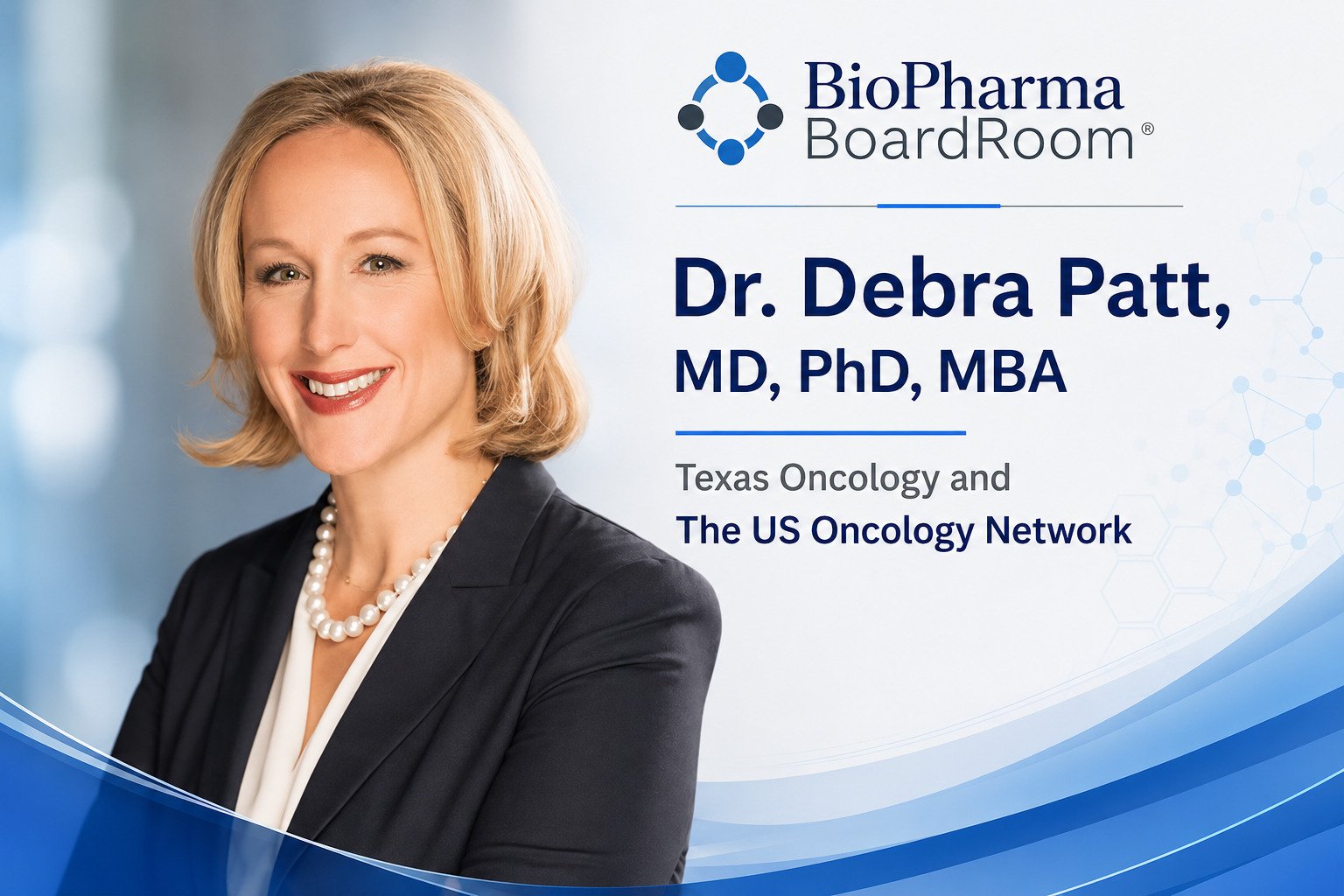
Dr. Debra Patt discusses how electronic patient-reported outcomes (ePROs), virtual care teams, and digital health innovations are reducing hospitalizations, improving treatment continuity, and reshaping the future of value-based cancer care.
As oncology care becomes increasingly personalized and technology-enabled, digital tools are playing a growing role in improving patient outcomes beyond the clinic walls. In this exclusive BioPharma Boardroom interview, Dr. Debra Patt, MD, PhD, MBA, of Texas Oncology and The US Oncology Network, shares insights from her latest research on remote therapeutic monitoring, electronic patient-reported outcomes (ePROs), and the nationwide OncoPRO initiative. She explains how real-time symptom tracking is helping reduce hospitalizations, extend treatment duration, and create a more continuous patient-care experience, while offering a glimpse into how AI and digital health technologies may redefine value-based oncology care in the years ahead.
Q: Your research highlights the impact of remote therapeutic monitoring and patient-reported outcomes on hospitalization rates for metastatic solid tumor patients. What were the most significant findings, and how could they reshape supportive oncology care?
- A: It’s an exciting time when we think about the digital transformation in clinical practice, and I think electronic patient-reported outcomes (ePROs) are a really important part of that.
- Across Texas Oncology, we've implemented ePROs for all of our patients with active cancer therapy and what this study demonstrated was that it took several different practices that were using the Canopy ePROs tool, and it looked at their outcomes. What it showed is that there were fewer hospitalizations among patients that were using ePROs instruments, and also that there was a cost of care savings that was substantial – millions of dollars per thousand patients – which is really important.
- This is really a transformation or a paradigm shift in how we think about care delivery. If you think about older models where patients would just call nurses to talk about their symptoms and eventually get a call back from the clinic, what we can appreciate is there's a lot of variability in how long it takes to control patient symptoms.
- By having patients use ePROs instruments, like a tool on their smartphone that’s either prompted or on demand whenever they're experiencing symptoms, it allows them to have faster response times when they have symptoms, which gives the clinic an opportunity to intervene early for faster control of those symptoms, and the natural consequence if they're left unchecked is that they can worsen, and patients might require hospitalization or ER visits. By implementing ePROs tools, we've been able to serve patients better and deliver higher quality care more safely in the community setting. I'm excited about this and I think it represents a standard of care change across oncology practices.
Q: As immune checkpoint inhibitors become more widely used, what role does remote monitoring play in identifying adverse events earlier and improving treatment continuity?
- A: What we've learned is that when we use ePROs instruments to detect symptoms in patients on checkpoint inhibitors, we are able to understand when they're having adverse events sooner and intervene sooner, and by doing that we're able to keep them on therapy longer because their symptoms are better controlled. The promise of modern cancer care is to allow patients to live without cancer taking their life and therapy taking their livelihood.
- ePROs really help us support that mission because it helps to have patient symptoms controlled faster. They're able to stay on therapies longer and benefit from those therapies with disease control.
- About nine years ago, Ethan Basch had a plenary session at the ASCO meeting showing that ePROs were associated with longer time on therapy and improved survival. We observe in clinical practice that this is borne out to be true and it's not novel. If you're controlling patient symptoms better because you're intervening more rapidly when they have adverse outcomes, you can prevent serious adverse events, like ER visits and hospitalization.
Q: The OncoPro initiative represents a large-scale implementation of electronic patient-reported outcomes. What operational or technological barriers had to be overcome to deploy ePROs nationally?
- A: ePROs represent really a paradigm shift in our care delivery. In order to implement them, we had to change our infrastructure of how patient symptoms are coming in to nurses. In traditional clinical practice, you have a nurse that sits at a desk and supports clinicians in practice, which is still true, but what we set up in Texas Oncology to support these patients is a team of virtual nurses to make sure that they were always available to control patient symptoms. They would be available on demand and by doing that we were able to reduce the time it takes to respond to patient symptoms.
- That's a key performance indicator we track as a practice every day and this last month, we were at 37 minutes for response because in some practices, it might take them a day or two days to respond to patient symptoms. The OncoPro initiative has allowed us to share learnings with other practices and understand some of the barriers and opportunities to optimize this workflow to try to make it more successful to help patients meet their needs and have their symptoms controlled.
Q: How are digital symptom monitoring tools changing the relationship between patients and oncology care teams in community oncology settings?
- A: It's a paradigm shift in care delivery and that means that we have better control over patient symptoms and the care team is more continuous. Historically, patients would come in and see their clinician and if they had a serious adverse event, they would call the clinic but there could be big gaps in the communication between patients and their clinics. By having on-demand symptom reporting, like we do with ePROs instruments, we're able to have really continuous monitoring of patients.
- That's become more and more important, especially with the advent of bispecific antibody therapies and cellular therapies like CAR-T cell therapy, where we really want to have continuous monitoring of patients for adverse outcomes. We'd like it if patients were able to stay at home to be with their loved ones in the comfort of their own bed and surrounded by their own support systems, but we can still monitor them from the clinic. It's given a more wrap-around clinical experience for the patients we serve.
Q: Looking ahead, how do you see AI, remote monitoring, and patient-reported data converging to influence value-based oncology care and clinical decision-making?
- A: It's a really exciting time in cancer care, and it has been for 20 years, an innovation where we've seen the science is amazing. Now what we're seeing is care delivery enhancements with digital transformation. That's true for everything from letting doctors be more engaged with of the use of AI scribes to having ePROs be used by patients to make a more continuous clinical experience.
- It's giving people better experiences for the healthcare they want. For example, because I use an AI scribe in my clinical practice, I get to have eye contact with my patients continuously and I'm not in front of the computer or worried about documenting what they're telling me.
- By having patients have ePROs on demand when they're at home, they don't have to have a clinic visit for me to check up on them and know how they're doing. They can do that from the comfort of their own home and they're supported more continuously.
- What we want is to care for patients all the time and have relationships with our patients in the clinic from our nurses and our doctors. I believe by using digital tools like AI in clinical practice, when implemented with the right guardrails and the right cautions, that we're able to do more of what we want, act top of license and give the kind of care delivery that we want to for patients.