02 November 2026 | Monday | Interaction
Editor: BioPharma Boardroom
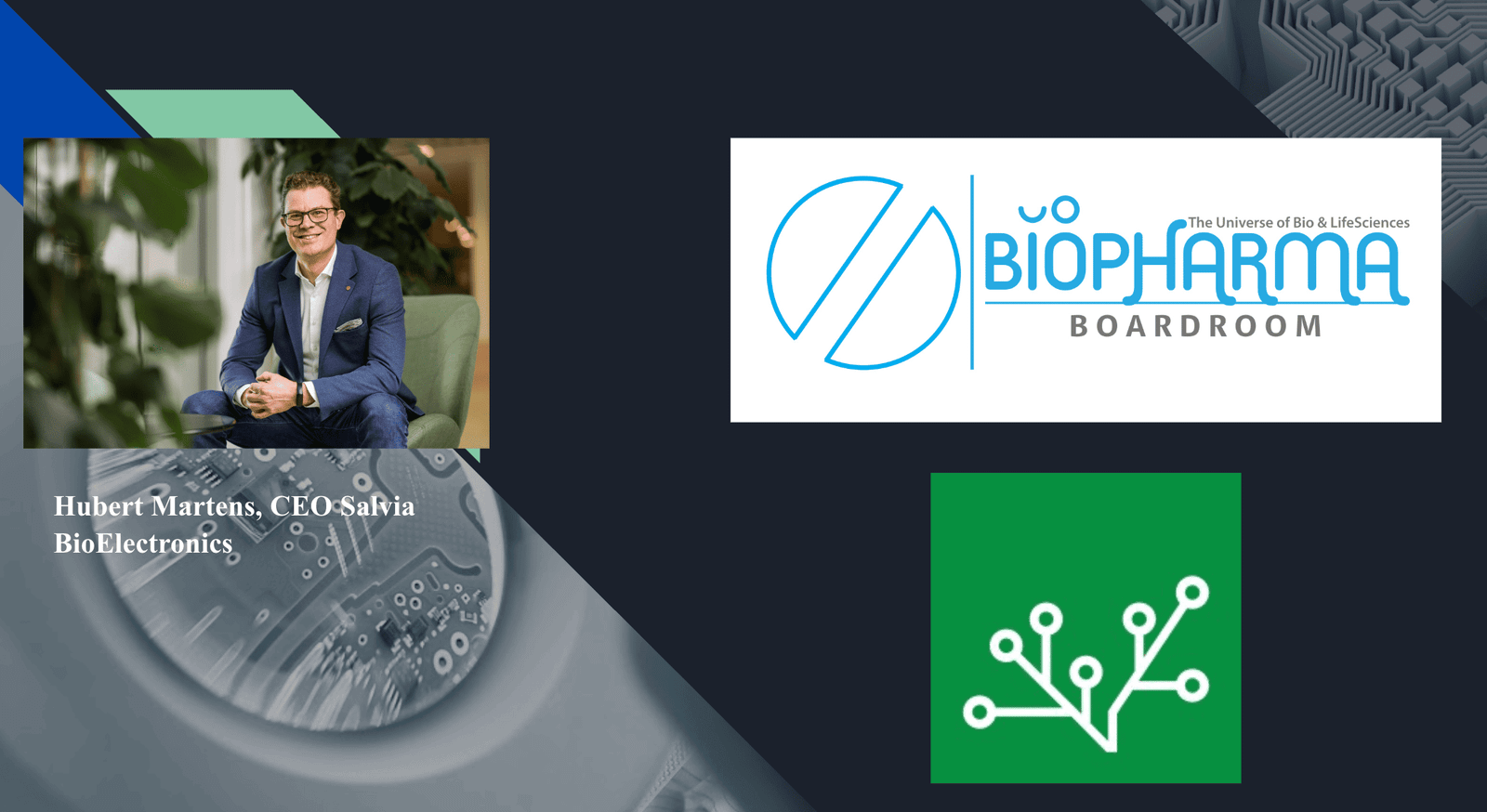
Biopharma Boardroom speaks with Hubert Martens, CEO of Salvia BioElectronics, about the development of the MySalvia System, an investigational implantable neuromodulation therapy for people living with resistant migraine. Martens discusses the technology behind MySalvia, findings from earlier clinical studies, the challenges facing patients who do not respond to existing treatments, and the company's pivotal RECLAIM-II trial involving approximately 150 patients across more than 20 US sites. He also outlines the path towards potential FDA approval, commercialisation and future applications in neurological disorders.
Q. Salvia has implanted the first patient in its pivotal RECLAIM-II trial in the United States. What does this milestone mean for the company, and what are you hoping to demonstrate through this larger study?
RECLAIM-II marks an important milestone not only for Salvia, but also for the broader field of implantable neuromodulation in migraine. As our pivotal U.S. study, it represents the expansion of our clinical development program from Europe and Australia into the U.S.
The study is designed to evaluate the safety, durability, and efficacy of the MySalvia System in a larger patient population. At its core, we are seeking to determine whether implantable neuromodulation can safely deliver a clinically meaningful reduction in migraine burden for people living with resistant migraine. If successful, RECLAIM-II is intended to generate the clinical evidence needed to support a future U.S. regulatory submission and could pave the way for the first commercial approval of the MySalvia System.
Beyond advancing our own therapeutic approach, RECLAIM-II provides an opportunity to further explore the role of implantable neuromodulation within the migraine treatment landscape. Despite significant advances in migraine care in recent years, many patients continue to experience substantial disability even after trying multiple preventive therapies. We believe implantable neuromodulation has the potential to offer a different treatment approach for these patients and RECLAIM-II will help us better understand its potential role in addressing this unmet need.
Q. People with resistant migraine often continue to experience significant disability despite trying multiple preventive treatments. What are the biggest gaps in current migraine care, and how could the MySalvia System help address them?
Despite significant advances in migraine treatment, including CGRP-targeting therapies and onabotulinumtoxin-A, many patients continue to experience frequent and disabling attacks even after trying multiple preventive therapies. Migraine is a highly heterogeneous disease, and what works well for one person may not work for another.
The unmet need remains particularly significant for people with resistant migraine, whose existing preventive therapies have not provided sufficient benefit or have not been tolerated. This highlights the importance of expanding the range of treatment options to support a more individualized treatment journey.
This is where we believe MySalvia Therapy could make a difference. Rather than targeting migraine through medication, our investigational therapy takes a different approach based on Implantable Extracranial Neuromodulation, or IEN, an emerging category within migraine care.
Neuromodulation is a well-established therapeutic approach that has been used for decades in neurological conditions such as Parkinson's disease and epilepsy. In migraine, the processing of sensory and pain signals is dysregulated, causing ordinary stimuli such as touch, sound or light to be experienced as painful. The MySalvia System uses a differentiated neuromodulation technology that is being evaluated specifically for resistant migraine. It is designed to deliver targeted electrical stimulation to nerves involved in migraine, with the aim of modulating these migraine-related neural pathways and restoring a more balanced response to these signals over time. Ultimately, the aim is to reduce the frequency and severity of migraine attacks.
More broadly, we see implantable neuromodulation as an additional treatment option for patients not responding or responding insufficiently to existing migraine treatments, rather than a replacement for therapies that already work well for patients. For people living with resistant migraine, the impact goes far beyond the attacks themselves. It can mean missed days at work or school, cancelled plans, and less time with family and friends. Ultimately, our ambition is not simply to reduce migraine days, but to help people regain greater control over their lives, participate more fully in the activities that matter to them and look to the future with renewed confidence.
Q. The MySalvia System uses two ultra-thin implants to stimulate nerves at the front and back of the head. What makes this approach different from other neuromodulation therapies, and why is targeting both areas important?
One of the defining characteristics of the MySalvia System is that it was designed specifically for migraine. While many earlier implantable neuromodulation systems were originally developed for other chronic pain conditions and later adapted for headache disorders, the MySalvia System was purpose-built for the anatomy of the head and the neural pathways involved in migraine. The system consists of two thin, flexible bioelectronic foils placed just beneath the skin and is designed to be visually discreet.
From a therapeutic perspective, MySalvia targets both the supraorbital and occipital nerves, which are connected to the trigeminovascular system, a key neural pathway involved in migraine pathophysiology. The scientific rationale behind this multi-nerve approach is that stimulating both regions may engage a broader set of migraine-relevant pathways and potentially result in greater therapeutic benefit than targeting a single nerve alone.
Published studies have reported greater reductions in headache burden with combined supraorbital and occipital nerve stimulation compared with findings from studies of occipital nerve stimulation alone. However, these results come from separate studies involving different devices and patient populations, rather than direct head-to-head comparisons. These observations helped inform our approach and provide part of the scientific rationale for its ongoing clinical evaluation in RECLAIM-II.
Q. Earlier studies showed encouraging safety results and initial signs of sustained benefit. What have you learned from those studies, and how have those findings influenced the design of RECLAIM-II?
Our early studies, RELIEF and RECLAIM, have provided important insights that have helped us refine both the MySalvia System and our clinical development strategy. Across more than 500 patient-months of follow-up, we have observed a favorable safety profile.
Importantly, these studies gave us a better understanding of how patients respond to and interact with the system, and which endpoints and patient populations are most relevant for further evaluation.
These insights have directly informed the design of RECLAIM-II, including refinements to patient selection, study methodology and endpoint strategy. Building on our earlier clinical experience, this larger, controlled pivotal study is designed to rigorously evaluate the safety, durability and efficacy of the MySalvia System in adults with resistant migraine and generate the clinical evidence needed to support potential future regulatory submissions.
Q. MySalvia is designed as a drug-free treatment that patients activate twice daily using a wearable device. How important could convenience and ease of use be for people living with resistant migraine, and what challenges might patients face in adopting an implantable therapy?
For people with resistant migraine who may require treatment over many years, convenience and ease of use are important considerations alongside clinical effectiveness.
Patients activate the therapy themselves twice daily, using a small external wearable device, allowing them to receive treatment at home as part of their daily routine.
We also placed particular emphasis on the system’s physical design. The implants are ultra-thin and designed to be discreet and removable. Unlike systems with implanted batteries, MySalvia uses an external power source, avoiding the need for battery-replacement procedures.
Choosing an implantable therapy is an important and personal decision. Patients and physicians will need to consider the potential benefits and risks of the procedure, the available clinical evidence, and individual patient needs and preferences. Through RECLAIM-II, we are evaluating MySalvia’s safety, efficacy and whether its benefits are sustained over time. If the results support its potential, MySalvia could offer an additional option for people requiring long-term management of resistant migraine.
Q. With RECLAIM-II expected to enroll around 150 patients across more than 20 US sites, what are the key milestones ahead, and how could the results shape your plans for regulatory approval and eventual commercialization in the US?
Our immediate focus is the successful enrollment and execution of RECLAIM-II at more than 20 participating trial sites across the United States. The next key milestones are progressing patient enrollment, completing the primary endpoint assessment, and generating longer-term follow-up data.
From a clinical perspective, the study is designed to evaluate three areas: clinically meaningful efficacy, a favorable safety profile, and durability of treatment benefit over time. Specifically, the primary endpoint evaluates the proportion of patients achieving at least a 30% reduction in Monthly Migraine Days, while long-term follow-up for up to three years will help us better understand the long-term effects of the therapy.
If successful, RECLAIM-II is intended to generate the clinical evidence needed to support a future FDA submission and could ultimately pave the way for Salvia's first commercial product in the U.S., bringing a purpose-built implantable neuromodulation option to people living with resistant migraine.
Beyond Salvia’s own development program, we believe RECLAIM-II could contribute to a broader understanding of the role implantable neuromodulation may play in migraine care. While our current clinical focus is on people with resistant migraine, we are also exploring the potential of our technology in cluster headache through dedicated clinical studies in Australia and the Netherlands. Looking further ahead, we see opportunities to investigate whether this approach could benefit broader patient populations. Ultimately, our ambition is to establish neuromodulation as an additional treatment modality alongside existing pharmacological and biological approaches, offering patients and physicians greater choice in how these debilitating neurological conditions are managed.




© 2026 Biopharma Boardroom. All Rights Reserved.