19 November 2026 | Thursday | Interaction
Editor: BioPharma Boardroom
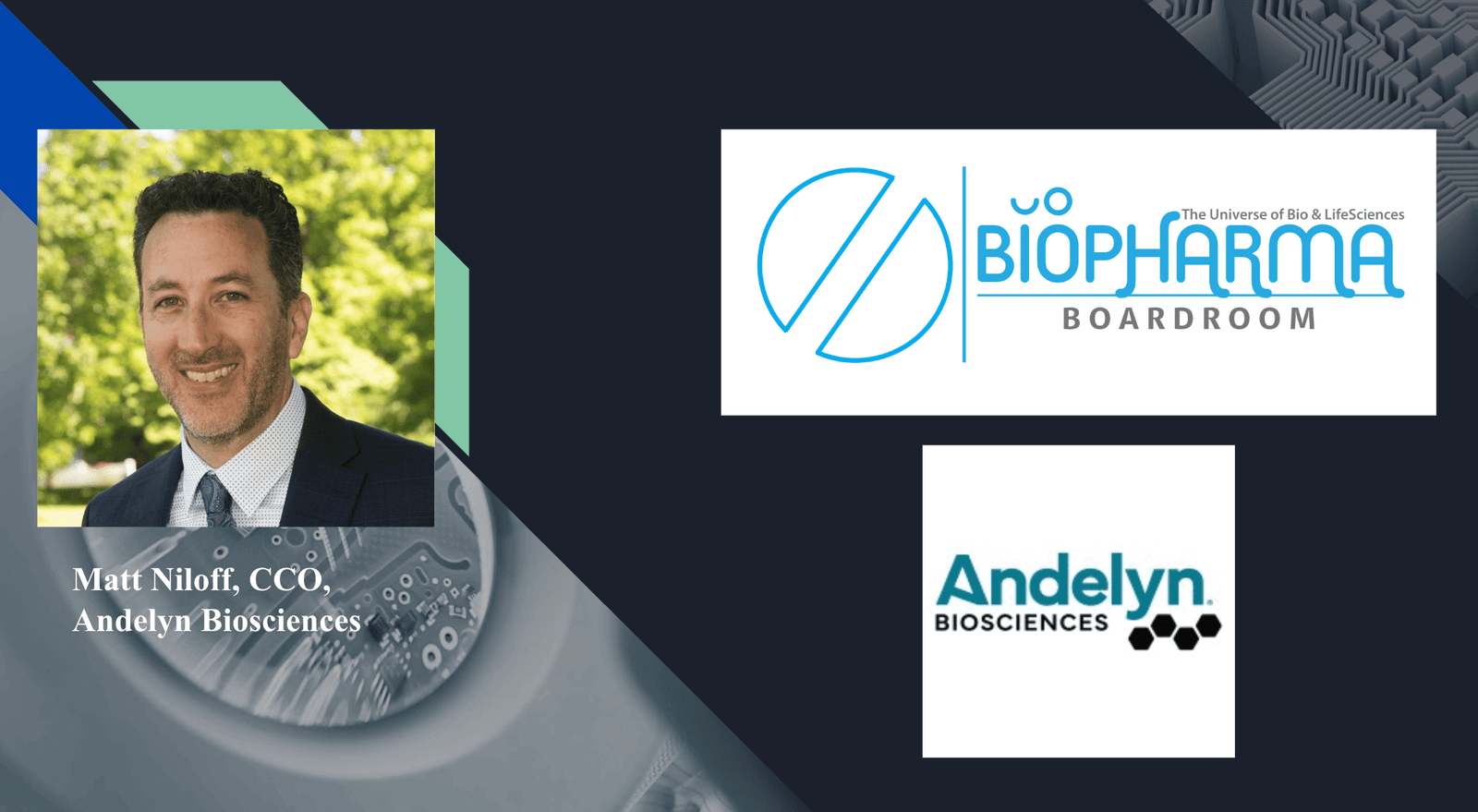
Expanding cell and gene therapy trials into Europe presents challenges in regulatory compliance, import procedures, product handling and clinical supply. Andelyn and PQP Group have partnered to coordinate manufacturing, Qualified Person certification and distribution services, helping developers manage cross-border requirements and reduce potential delays. BioPharma Boardroom speaks with Matt Niloff, CCO, Andelyn Biosciences, about the partnership, challenges in international clinical supply and opportunities to support cell and gene therapy programmes from clinical development through commercialisation.
Q. What prompted Andelyn to partner with PQP Group, and what challenges are cell and gene therapy developers currently facing when moving clinical trial materials from the US into the EU and UK?
The motivation was straightforward: manufacturing a high-quality therapy is essential, but sponsors also need a reliable pathway to deliver it to the clinical sites where patients will receive it. For programs expanding beyond the United States, those activities must be connected. We established this partnership to bring Andelyn’s development, manufacturing, and quality capabilities together with PQP’s regional expertise, helping sponsors treat international supply as an integrated part of their development program rather than a separate challenge to solve after manufacturing.
Andelyn has supplied clinical materials to European clients for many years. Historically, those clients have arranged and coordinated the regional services needed to support import, certification, and clinical supply. What is new is not our support for European clients, but the integration of these activities through our partnership with PQP. This gives sponsors a coordinated pathway that links our established manufacturing and quality capabilities with regional expertise and services.
Moving clinical material into the EU and UK is not simply an international shipping exercise. It requires coordinating manufacturing documentation, applicable regulatory requirements, import arrangements, Qualified Person review and certification, and distribution to clinical sites. These activities are interdependent. A shipment can be physically ready to move while the documentation or release pathway still requires work. Conversely, a program may have its regulatory preparations underway without fully establishing how material will be imported, stored, and supplied.
The EU and UK also need to be treated as distinct regulatory environments. Sponsors should not assume that establishing a pathway in one automatically resolves the requirements for the other. This makes access to expertise in both regions particularly valuable, especially for organizations whose internal teams are primarily focused on US development.
For gene therapy programs, disconnected planning can have significant consequences. Handling conditions can be demanding, and clinical supply needs must align with site readiness and patient scheduling. A delay is therefore not merely an administrative inconvenience. It can affect broader study execution and introduce uncertainty into an already complex development process.
Another challenge is the number of interfaces a sponsor may need to manage. Manufacturing, quality review, import services, customs arrangements, depot storage, and distribution can involve different organizations. Each may perform its own role well, but the sponsor still needs those roles to function as a single coordinated pathway. That coordination can place a considerable burden on a development team.
PQP was a complementary partner because its Manufacturing and Import Authorizations, QP services, and regional supply capabilities address the steps that link US manufacturing to EU and UK supply. Together, we have completed foundational work to establish a defined process for sponsors.
Ultimately, this partnership extends the value of manufacturing expertise into clinical delivery. Our goal is to help sponsors anticipate requirements earlier, reduce avoidable coordination burdens, and establish a more reliable path to the patients their programs are intended to serve.
Q. The partnership brings together Andelyn’s manufacturing and quality capabilities with PQP’s regulatory, import, and distribution expertise. How will this integrated approach simplify the process for sponsors and help accelerate international clinical programs?
An integrated approach connects activities that are sometimes planned separately, even though they depend on one another. Manufacturing, quality documentation, QP certification, import, and distribution all affect whether clinical material reaches a site when needed. Bringing those capabilities into a coordinated framework gives sponsors a clearer way to plan the entire pathway, rather than managing a series of individual transactions and hoping the handoffs align.
Andelyn contributes development, manufacturing, quality, and supply chain capabilities for producing therapies. PQP brings the regional services needed to support entry into the EU and UK, including QP audit reports and declarations, Product Specification File creation, Investigational Medicinal Product Dossier and batch review, batch certification, and import and distribution support. The partnership integrates those services around the sponsor’s program.
That connection matters because upstream decisions can affect downstream readiness. For example, import arrangements and storage requirements need to be considered alongside the anticipated manufacturing schedule. Addressing those dependencies earlier creates an opportunity to identify gaps before they become urgent obstacles.
Consider a sponsor preparing to add European clinical sites to a US-based program. Under a coordinated approach, sponsors can consider manufacturing and regional supply requirements together. That does not remove any regulatory obligations, but it can reduce the risk of discovering late in the process that an important requirement has not been addressed.
The benefit is also organizational. Sponsors have a connected team supporting the pathway, with Andelyn maintaining the lead relationship throughout execution. They do not have to independently assemble every element of the service model or become the primary coordinator among providers.
The decision to use this integrated model rests with the client. Sponsors can access PQP’s services through the partnership or contract and coordinate those services directly. The partnership offers an additional option for sponsors seeking coordinated support while preserving their flexibility to select the service arrangements that best meet their program’s needs. When we talk about acceleration, we mean creating opportunities to reduce avoidable waiting, repeated requests, and late-stage problem-solving.
The more meaningful objective is predictability. A sponsor should understand what needs to happen, which activities depend on others, and where decisions are required. A more predictable supply pathway enables better coordination with clinical operations and more informed planning for international expansion.
Ultimately, integration should make a technically and operationally complex process easier for the sponsor to navigate. It allows the sponsor to focus more attention on advancing the therapy while maintaining visibility into the work required to support its international clinical program.
Q Andelyn will remain the single point of contact for sponsors throughout project execution. How important is this model in reducing supply chain complexity and improving coordination across different regulatory markets?
The single-point-of-contact model matters because complexity does not disappear just because each activity has an experienced provider. Someone still needs to connect those activities, understand their dependencies, and help resolve issues that cross organizational boundaries. Without a coordinated model, that responsibility can fall heavily on the sponsor, who may already be managing development, clinical operations, and regulatory submissions with a relatively small internal team.
For sponsors who choose the integrated model, Andelyn’s role is to maintain the lead sponsor relationship throughout project execution and to align our capabilities with PQP’s specialized regional services. The goal is to provide the sponsor with a cohesive experience rather than requiring the sponsor to manage an additional set of disconnected suppliers. Multiple areas of expertise still underpin the service, but the sponsor has a central relationship to coordinate the work.
That distinction matters. A single point of contact should not create a barrier between the sponsor and the technical experts working on its program. It should provide a clear path to the right expertise, maintain continuity of communication, and help the sponsor understand how developments in one area affect the rest of the project. Direct technical discussions remain valuable whenever the subject requires them.
For example, a change in the anticipated manufacturing schedule may affect import timing, depot arrangements, and clinical supply planning. These implications need to be considered together. A central coordinating relationship helps reduce the likelihood that different parties are working from different assumptions or that the sponsor must repeatedly communicate the same update across several organizations.
The model is particularly useful across regulatory markets because it combines continuity with local expertise. The sponsor retains its relationship with Andelyn, while PQP provides knowledge and authorized services relevant to EU and UK supply.
It is equally important to be clear that simplified communication does not alter formal responsibilities. The sponsor retains its applicable obligations, and QP certification remains a distinct professional and regulatory responsibility. An integrated service model should make those responsibilities easier to navigate, not obscure them.
For sponsors, the intended result is a reduced coordination burden and better visibility into the overall pathway. Rather than spending time reconciling updates from separate providers, they can focus discussions on program priorities, upcoming decisions, and potential risks.
We view this as much a relationship model as an operating model. Sponsors need a partner that understands their therapy and development milestones. Maintaining that continuity helps align individual supply activities with the broader goal of executing a successful international clinical program.
Q Cell and gene therapies often present unique manufacturing, handling, and distribution challenges. How has the partnership been structured to address these requirements while maintaining product quality and reliable delivery to clinical sites?
Cell and gene therapies cannot be treated as interchangeable products under a universal supply model. Their manufacturing processes, stability profiles, storage conditions, and clinical use requirements can differ substantially. Our partnership brings manufacturing and regional supply expertise into a single framework, but each program's pathway still needs to reflect the therapy's characteristics and the requirements of its clinical study.
Andelyn’s contribution begins with understanding the product and the manufacturing process. Development, analytical, manufacturing, and quality knowledge provide the foundation for decisions about the material and its supporting documentation. PQP adds the expertise and authorized services needed to support import, QP review and certification, and regional supply. Connecting those perspectives is central to making the pathway appropriate for the product.
For a temperature-sensitive gene therapy, planning must account for the required storage conditions, the suitability of the shipping approach, the anticipated journey, and the receiving location’s readiness. Any intermediate storage or distribution activity must be consistent with the product’s requirements. These considerations should inform the supply pathway rather than being added after the route has already been selected.
Reliable delivery also requires attention to what happens when plans change. Potential transport disruptions, receiving-site scheduling issues, or quality concerns can affect more than one organization. A coordinated model provides a clearer basis for bringing in the relevant manufacturing, quality, and regional supply experts. The specific response must remain appropriate to the product, the circumstances, and the applicable quality requirements.
Structurally, the partnership combines a defined process with access to services such as import arrangements, shipping, depot storage, and distribution support. This provides a framework for addressing program-specific needs. This does not mean every therapy requires every service or follows the same route.
For us, quality and delivery reliability are interconnected objectives. Reliable supply means more than arriving on time. It means making the right material available under the appropriate conditions, with the necessary documentation and certification to support its use.
The purpose of the partnership is to connect those requirements from manufacturing through regional supply, helping sponsors build a pathway that respects the therapy’s characteristics and supports the clinical program’s needs.
Q As more cell and gene therapy developers pursue multinational clinical trials, how do you see demand evolving for CDMOs that can provide integrated manufacturing, regulatory, and cross-border supply chain support?
We expect demand to shift toward partners that can integrate manufacturing execution with the practical requirements of an international development program. Manufacturing capacity and technical expertise will remain fundamental, but sponsors also need to understand how the material produced will support their next clinical milestone. As trials extend across borders, that question increasingly encompasses regulatory documentation, certification, import, storage, and distribution.
In our view, sponsors will value continuity across those activities more. Integrated support helps align the manufacturing plan with the clinical strategy and makes international supply part of the broader program discussion.
That is particularly relevant for emerging developers. These organizations may have strong scientific and clinical expertise but may not maintain large internal teams dedicated to every aspect of global supply. They need access to specialized capabilities, but they also need those capabilities to work together. The value is not simply having more services available. It is reducing the management burden of making those services function as a coordinated whole.
We also believe the conversation will increasingly focus on readiness and predictability, not capacity alone. A realistic, well-coordinated plan can be more valuable than an aggressive schedule that does not fully account for international supply dependencies.
At the same time, integration should not be confused with every CDMO owning every capability in every geography. Strategic partnerships can effectively bring complementary expertise together. The key questions are whether responsibilities are clear, whether the organizations can coordinate effectively, and whether the sponsor experiences the arrangement as a connected service rather than another layer of complexity.
Our relationship with PQP reflects that approach. Andelyn remains focused on its strengths in development, manufacturing, and quality, while PQP contributes specialized EU and UK capabilities. Together, we can support a broader portion of the sponsor’s pathway.
Looking ahead, we expect sponsors to increasingly assess CDMOs on how well they support the full context of a program: the therapy, its stage of development, the intended markets, and the practical path to clinical use. That does not diminish the importance of manufacturing excellence. It raises expectations for how manufacturing connects to everything that follows.
Ultimately, the strongest demand will be for partners that combine technical depth with effective coordination. Developers need more than a collection of capabilities. They need a workable path from producing their therapy to supplying the studies that will determine its future.
Q. Looking beyond the initial focus on EU and UK clinical supply, what opportunities do you see to expand the partnership into commercial-stage programs or additional international markets, and how does this fit into Andelyn’s broader growth strategy?
The first opportunity is continuity as a sponsor transitions from clinical development to commercialization. Our announcement already recognizes both clinical and commercial supply pathways, though we must assess the requirements for each commercial program separately. The strategic value lies in building a relationship and a body of product knowledge to support discussions about the next stage, rather than treating each development milestone as a separate service requirement.
Commercial supply involves a different operating context, including requirements tied to the approved product, ongoing supply planning, and market-specific distribution arrangements. For that reason, we would approach any commercial opportunity with a detailed assessment of the therapy, the intended markets, and the required services and authorizations.
We can carry forward the benefit of coordination. Familiarity with the manufacturing process, quality documentation, and the regional supply pathway can provide a useful foundation for planning. The opportunity is to preserve that continuity while adapting the operating model to the demands of the commercial stage.
Additional international markets are another potential area to evaluate, guided by the sponsor’s needs. However, we would not view the EU and UK framework as automatically transferable to other regions. Each market has its own regulatory, import, and distribution considerations. Expansion would require appropriate expertise, a clear understanding of local requirements, and a service model suited to the product.
Our priority is disciplined expansion rather than geographic reach for its own sake. A broader offering is valuable only if it provides sponsors with a dependable pathway. The relevant question is not how many markets can be listed, but whether the capabilities and coordination needed to support a particular program are genuinely in place.
This aligns with Andelyn’s broader direction to support gene therapy developers from early development through clinical and commercial manufacturing. Our capabilities span plasmid services, process and analytical development, and cGMP manufacturing. Partnerships like this connect that foundation to the additional expertise sponsors need as their programs advance internationally.
It also reflects a practical approach to growth. Expanding support does not always require duplicating specialized infrastructure or building every capability internally. Partnering with a complementary partner can extend what we offer while allowing each organization to stay focused on its strengths.
Ultimately, the opportunity is to grow alongside our clients. As their programs progress and their geographic needs evolve, we aim to help connect high-quality manufacturing with appropriate supply pathways. That is the strategic purpose of this partnership: broader support for sponsors, grounded in the capabilities needed to bring therapies to patients.



© 2026 Biopharma Boardroom. All Rights Reserved.