30 November 2026 | Monday | Interaction

Autosomal dominant polycystic kidney disease (ADPKD) remains a major cause of kidney failure, with limited treatment options available to patients. HighTide Therapeutics has reported encouraging preclinical findings for HTD1801, which reduced median cystic burden in human kidney organoids from 20.40% to approximately 10.70%. The investigational therapy targets the AMPK and NLRP3 pathways, with the company planning to advance towards clinical evaluation in patients with ADPKD. BioPharma Boardroom speaks with Dr. Filip Surmont, Chief Medical Officer of HighTide Therapeutics, about the study findings, HTD1801’s dual mechanism of action, unmet needs in ADPKD treatment and the next steps towards clinical development.
Q. HighTide Therapeutics has presented encouraging preclinical results for HTD1801 in autosomal dominant polycystic kidney disease. What stands out most from these findings, and how do they strengthen your confidence in the drug's potential as a treatment for ADPKD?
The most notable finding is that HTD1801 reduced cystic burden in PKD1−/− human iPSC-derived nephron organoids.
In this study, HTD1801 significantly reduced the median cystic area fraction to 10.70%, compared with 20.40% in the forskolin (FSK) model control group. Meanwhile, the proportion of organoids with a low cystic burden (<20%) increased from 46.9% to 97.3%, while the proportion with a high cystic burden (≥30%) decreased from 8.2% to 0.
These findings demonstrate that HTD1801 effectively suppresses cyst expansion in PKD1-mutant human nephron organoids, providing compelling translational evidence supporting its development for human ADPKD. Human nephron organoids offer a clinically relevant model to bridge the translational gap between pre-clinical data and human disease. At the same time, HTD1801 has already been evaluated in multiple Phase 3 clinical trials in patients with type 2 diabetes and pharmacokinetic studies in individuals with hepatic or renal impairment, collectively supporting its favorable safety and tolerability profile in a human population. Together, these data provide a strong foundation for accelerating the clinical development of HTD1801 in ADPKD as a potential disease modifying treatment in patients with ADPKD.
Q. Despite the availability of treatments such as tolvaptan, many patients with ADPKD still face limited therapeutic options. What are the biggest unmet needs in managing this disease, and how could HTD1801 help address them?
ADPKD is the most common inherited kidney disease and a leading cause of kidney failure, estimated to affect approximately 1.25–1.5 million people in China and up to 12 million worldwide. Tolvaptan is an oral non-peptide vasopressin receptor antagonist that specifically inhibits binding of AVP at the V₂ receptor of the collecting duct. It is the only approved treatment for ADPKD but has not been authorised in China for this indication; elsewhere, its use is restricted to patients at risk of rapid progression and limited by aquaretic side effects and the need for liver monitoring. With a mechanism distinct from vasopressin antagonism, HTD1801 could potentially be developed as a disease modifying alternative for patients unsuitable for tolvaptan, or as an add-on to it.
HTD1801 has a mechanism distinct from tolvaptan, targeting the AMPK–NLRP3 axis through two complementary mechanisms. By activating AMPK, HTD1801 suppresses cAMP-driven epithelial cyst proliferation, while NLRP3 inhibition helps mitigate renal inflammation and fibrotic remodeling. Through these complementary effects, HTD1801 may potentially target multiple key pathological processes involved in ADPKD.
There remains a clear need for alternative safe therapeutic options that can address key pathological processes underlying the disease.
Q. HTD1801 targets both AMPK and NLRP3 pathways, aiming to reduce cyst growth, inflammation and fibrosis. How does this dual mechanism differ from existing treatment approaches, and what advantages could it offer in slowing disease progression?
HTD1801 is designed to act through two complementary pathways within the AMPK–NLRP3 axis. AMPK activation suppresses cAMP-driven epithelial cyst proliferation, while NLRP3 inhibition helps mitigate renal inflammation and fibrotic remodeling. This dual mechanism distinguishes HTD1801 from current single-target approaches that address only one of these pathological processes. By combining these two mechanisms in a single molecule, HTD1801 may potentially address both cyst expansion and associated inflammatory and fibrotic processes.
Other agents in the pipeline are almost entirely upstream and mechanism specific. Vasopressin antagonism, polycystin restoration and glucosylceramide synthesis inhibition each address a single proximal node. None addresses the downstream inflammatory and fibrotic processes that determine nephron loss.
The extensive human safety database available for HTD1801 provides an additional point of differentiation versus assets in the early stages of clinical development.
Q. In the study, HTD1801 significantly reduced cyst expansion in human kidney organoids, with promising results compared with metformin. How should these findings be interpreted, and what further research is needed to determine whether similar benefits can be achieved in patients?
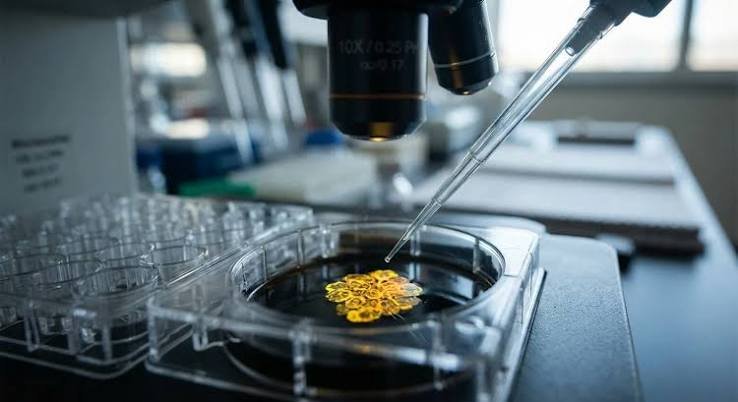
The study evaluated HTD1801 in PKD1−/− human iPSC-derived nephron organoids, in which cyst formation was induced by forskolin (FSK). Cystic burden was assessed by measuring the cystic area fraction.
HTD1801 significantly reduced the median cystic area fraction to 10.69% at 0.5 μM and 10.70% at 1 μM, compared with 20.40% in the FSK model control group. Metformin, used as a reference comparator, reduced the median cystic area fraction to 13.12%. These findings demonstrate the inhibitory activity of HTD1801 and its outperformance versus metformin against cyst expansion in this preclinical model.
HTD1801 has already been evaluated in Phase 3 trials in type 2 diabetes and in pharmacokinetic studies in hepatic and renal impairment. Subject to regulatory agreement, this existing nonclinical and clinical package could allow us to proceed faster to a proof-of-concept study in ADPKD, to the benefit of ADPKD patients, without a new first-in-human programme, and with dose selection informed by existing pharmacokinetic data, including in renal impairment.
The nephron organoid findings add evidence of HTD1801 activity in human-derived kidney tissue. With a substantial human safety database already in place and a promising animal study ongoing, HTD1801 is well positioned for direct evaluation in patients with ADPKD, where its therapeutic potential can be tested most informatively.
Q. HighTide is developing multifunctional therapies for cardiovascular, kidney and metabolic diseases. How does the potential application of HTD1801 in ADPKD fit into your broader development strategy, and could its mechanism offer benefits in other forms of chronic kidney disease?
Cardiovascular, kidney and metabolic diseases share common pathogenic mechanisms and often coexist, which complicates patient management and worsens prognosis. HighTide's vision is to target this shared pathophysiology with multifunctional therapies rather than treating each condition in isolation.
The ADPKD research is part of this strategy. HTD1801 is designed to exert its biological activity through the AMPK–NLRP3 axis, with the potential to deliver multidimensional benefits across CKM diseases. AMPK activation restores cellular energy and metabolic homeostasis, while NLRP3 inhibition reduces inflammation and fibrosis. Together, these mechanisms have the potential to deliver multidimensional benefits across cardiovascular–kidney–metabolic diseases.
The promising findings in ADPKD may support the expansion of HTD1801 into broader CKD indications, including metabolic-associated CKD, an opportunity the company is already actively pursuing.
Q. With these new preclinical findings supporting further investigation, what are the next steps for advancing HTD1801 toward clinical development in ADPKD, and what key challenges will need to be addressed before beginning studies in patients?
The next step is an early proof-of-concept study in patients with ADPKD. HTD1801 already has an established human safety and pharmacokinetic profile from its clinical programmes in metabolic disease, so we can move easily into the target population. The initial study will focus on safety, tolerability and pharmacokinetics, and will collect exploratory data on kidney volume, kidney function and mechanistic biomarkers.
We will continue to advance research on HTD1801 to further validate these findings and explore its potential therapeutic value in kidney diseases.
ADPKD is a highly heterogeneous disease, and identifying patients most likely to respond favorably to HTD1801 using simple and practical clinical approaches is an important scientific objective. The extensive clinical data already generated with HTD1801 and our collaboration with leading nephrology experts give us confidence that we can achieve it.





© 2026 Biopharma Boardroom. All Rights Reserved.