17 September 2026 | Thursday | Interaction
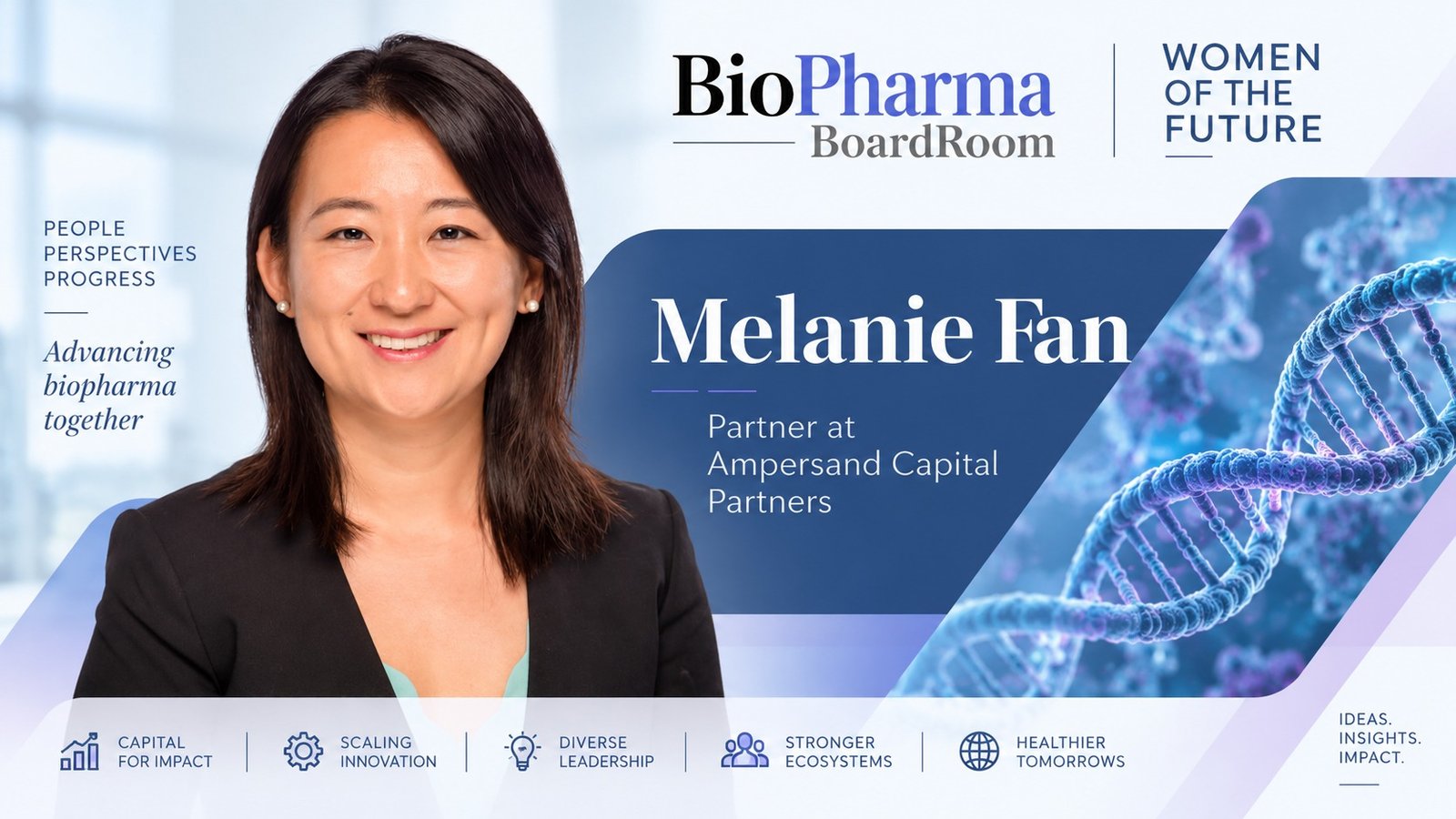
Scientific breakthroughs are advancing rapidly across complex biologics, cell and gene therapies, radiopharmaceuticals and ADCs, but translating those innovations into medicines at clinical and commercial scale requires an equally sophisticated ecosystem of manufacturing capacity, CMC expertise, specialist talent and resilient infrastructure.
In this Women of the Future conversation with BioPharma BoardRoom, Melanie Fan, Partner at Ampersand Capital Partners, discusses where investment can help close the gap between scientific innovation and patient delivery, why diversity of experience strengthens leadership teams, and the importance of developing commercial and financial fluency alongside scientific expertise. For women aspiring to senior leadership and investment roles, her message is practical: seek genuine ownership, step beyond functional silos and keep building capabilities outside your comfort zone.
Where do you see the biggest gaps between scientific innovation and the capital, infrastructure or expertise needed to bring those innovations to patients?
One of the biggest gaps, which we see directly through our investment focus, is manufacturing and scale-up. The industry has innovated faster than it has built the capacity to produce. Complex biologics, cell and gene therapies, radiopharmaceuticals and antibody-drug conjugates (ADCs) are all outpacing the specialized manufacturing capacity and chemistry, manufacturing and controls (CMC) expertise needed to make them reproducibly and affordably. Alongside that sits a talent gap in translational, regulatory, and process-development roles. This is exactly where Ampersand plays in the value chain. Not funding the therapeutic R&D, but building the infrastructure and teams that carry a validated innovation from bench to patient at clinical and commercial scales.
How important is diversity in leadership when evaluating the long-term potential of a life sciences company?
It is critical. In a world where trials are conducted globally and patient recruitment diversity is a priority, leadership teams need to be equally heterogeneous to be successful. A narrow range of experiences leads to predictable blind spots. Management team quality and balance are key diligence areas as we evaluate new investments. We are looking for groups where each person brings different strengths and is not afraid to challenge each other on the way to achieving the company’s collective goals.
What advice would you give to women scientists, entrepreneurs and executives looking to move into senior leadership or investment roles within the life sciences?
Build commercial and financial fluency early. That combination with scientific credibility is rare and the ability to translate innovative technical ideas into a viable business model is the fastest route into senior leadership. Seek roles with real P&L or program ownership rather than siloed functional roles, and continue looking for learning opportunities in areas that may not be where you are most comfortable.





© 2026 Biopharma Boardroom. All Rights Reserved.