04 May 2026 | Monday | Interview
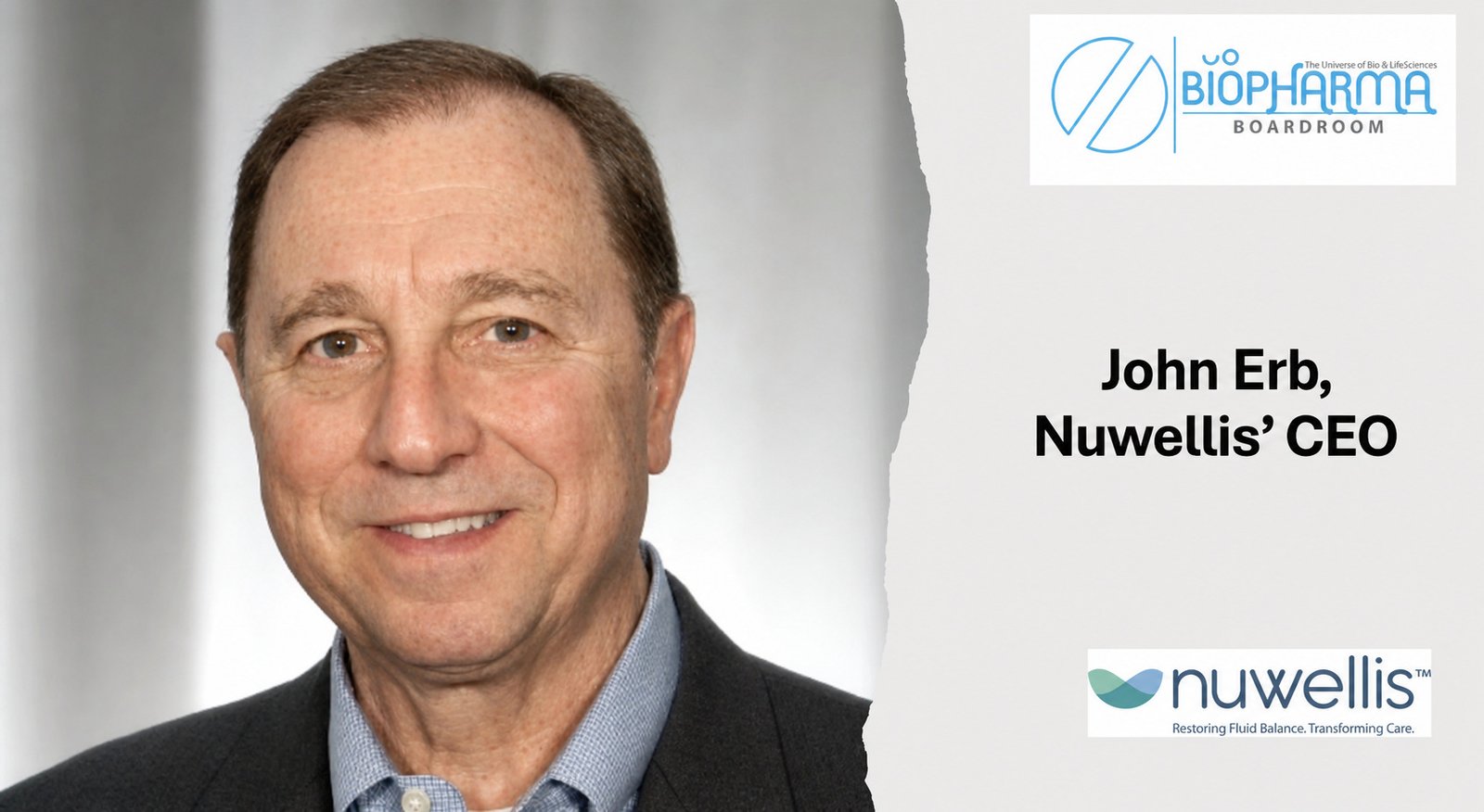
Fluid overload remains one of the most complex and costly challenges in cardiorenal care, particularly for patients who no longer respond to conventional diuretic therapies. As healthcare systems increasingly prioritize precision medicine, proactive intervention and data-driven clinical decision-making, technologies that enable more controlled fluid management are gaining momentum across acute and chronic care settings. In this exclusive Q&A with Biopharma Boardroom, John Erb, CEO of Nuwellis, explains how the company’s Aquadex SmartFlow System is helping clinicians address critical gaps in fluid overload treatment, why pediatric adoption is accelerating, and how evolving digital health capabilities could transform the future of cardiorenal management.
Q1. Fluid overload in cardiorenal patients is often inadequately managed with standard therapies. What critical gaps in current care pathways is Nuwellis addressing with its technology?
Fluid overload is one of the most persistent and underrecognized challenges in cardiorenal care, particularly when patients no longer respond to diuretics, which remain the standard of care. The gap we see is a lack of precision and predictability in how fluid is removed, especially in critically ill populations.
At Nuwellis, we are addressing that gap with the Aquadex SmartFlow System, which enables controlled, isotonic fluid removal in a way that is both predictable and tailored to the patient’s condition. This is particularly important because fluid overload is associated with increased mortality, longer hospital stays, and higher readmission rates. By offering clinicians a more precise tool, we are helping shift care from reactive management to a more controlled and clinically informed approach that can improve outcomes across both acute and chronic settings.
Q2. The Aquadex SmartFlow System is seeing notable traction in pediatric care. What factors are driving adoption in this segment, and how does the clinical value differ from adult populations?
Pediatric adoption of Aquadex is being driven by a clear unmet need. In children fluid balance is extraordinarily delicate, and even small deviations can have a significant impact. Traditional approaches are often not sufficient for these patients, particularly when dealing with immature or compromised kidney and heart function.
What Aquadex offers is a gentle, highly controlled method of fluid removal that clinicians can trust in sensitive environments. That precision is critical in pediatric care, where variability can be dangerous. We are seeing validation through adoption at children’s hospitals across the country, which reinforces both the clinical value and the growing confidence in ultrafiltration as a viable solution for younger patients. As a result, pediatrics has become our fastest-growing segment and a central part of our long-term strategy.
Q3. How is Nuwellis leveraging data and real-time monitoring to support more precise and proactive decision-making in acute and chronic care settings?
Precision in fluid management requires not just the ability to remove fluid, but the ability to do so in a controlled and informed way. The Aquadex system is designed to give clinicians real-time visibility into fluid removal rates, enabling them to adjust based on the patient’s evolving condition.
This level of control supports more proactive decision-making, particularly in critical care environments where timing and accuracy are essential. Beyond the device itself, we continue to build and leverage a growing body of clinical evidence across cardiology, nephrology, and pediatric settings. That combination of real-time monitoring and data-driven validation helps clinicians feel more confident in adopting a more precise approach to managing fluid overload.
Q4. Given that many patients receiving ultrafiltration have already failed diuretics, how are you working to reposition therapy earlier in the treatment continuum?
Historically, ultrafiltration has been viewed as a last-line therapy, used only after diuretics fail. We believe that paradigm is beginning to shift as more clinical evidence highlights the risks associated with prolonged fluid overload,delayed intervention, and the negative impact diuretics have on the health of the kidneys.
Our focus is on education and evidence generation, working closely with clinicians to demonstrate the benefits of earlier, more controlled fluid management. By highlighting outcomes such as reduced readmissions and improved patient stability, we are helping to reframe ultrafiltration as a complementary therapy rather than a rescue therapy. Over time, we expect this will lead to earlier intervention points, particularly in high-risk patient populations.
Q5. What are the main barriers to broader adoption of ultrafiltration technologies—whether clinical education, reimbursement, or hospital infrastructure—and how are you addressing them?
Adoption barriers tend to typically revolve around awareness, workflow integration, and economics. Many clinicians are still more familiar with traditional approaches like diuretics, so education is a critical first step.
We address this through ongoing clinical engagement and by supporting peer-reviewed research that reinforces the safety and effectiveness of ultrafiltration. From an operational standpoint, Aquadex is designed to integrate seamlessly into existing hospital workflows, which helps reduce friction for care teams. On the economic side, we focus on demonstrating the value proposition, particularly the potential to reduce costly readmissions and improve overall patient outcomes. When hospitals look at the total cost of care, the benefits become much clearer.
Q6. As medtech increasingly converges with digital health and AI, how do you see the future of cardiorenal management evolving, and where does Nuwellis aim to lead in that transformation?
We are moving toward a more integrated, data-driven model of care where therapy is not only delivered precisely but guided by predictive insights. In cardiorenal management, that means earlier identification of fluid imbalance, more proactive intervention, and tighter control over how therapies are administered.
At Nuwellis, our role in that evolution is to continue advancing precision therapy while building on the data and insights generated through our technology. As digital health and AI capabilities expand, there is a significant opportunity to further enhance decision-making and personalize treatment pathways. Our goal is to be at the forefront of that shift, helping define a future where fluid management is not reactive, but anticipatory, precise, and fully integrated into the broader care space.






© 2026 Biopharma Boardroom. All Rights Reserved.