04 November 2026 | Wednesday | Interview
Editor: BioPharma Boardroom
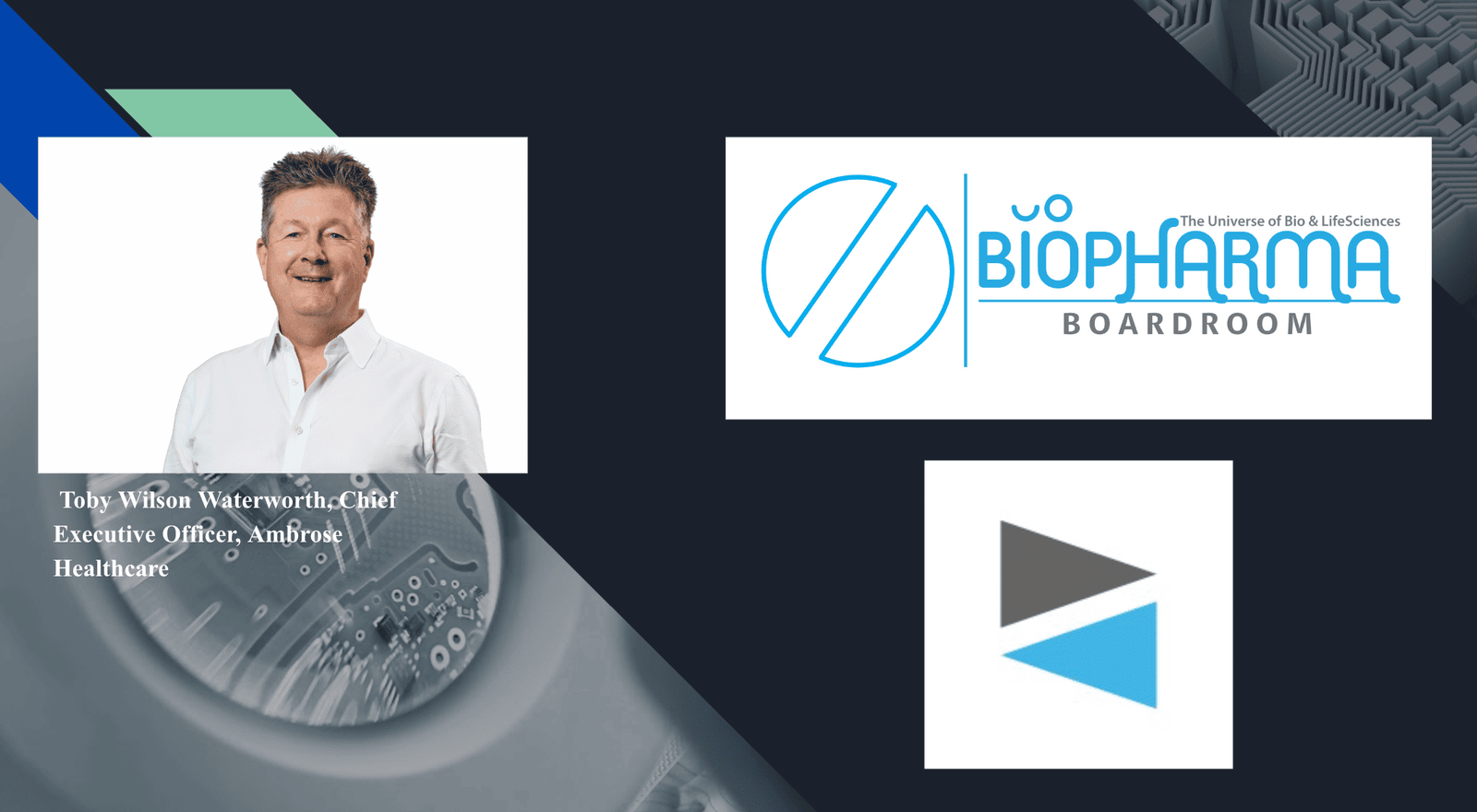
Ambrose Healthcare’s acquisition of AM-Pharma, valued at up to €161 million plus royalties, strengthens its rare disease pipeline and establishes its first European base in the Netherlands. The deal adds ilofotase alfa, an investigational enzyme replacement therapy for adult-onset hypophosphatasia (HPP), a condition with no approved treatment for adults diagnosed with the disease. In an exclusive interview with Biopharma Boardroom, Toby Wilson Waterworth, Chief Executive Officer of Ambrose Healthcare, discusses the strategic rationale behind the acquisition, plans to advance ilofotase alfa into Phase 2 development, unmet treatment needs and the company’s wider rare disease growth strategy.
Q. Ambrose Healthcare has acquired AM-Pharma in a deal worth up to €161 million. What made AM-Pharma and its lead asset, ilofotase alfa, an attractive acquisition, and how does this transaction fit into your broader rare disease strategy?
Ilofotase alfa has some very interesting data in a rare disease indication with significant unmet need. In a Phase 1b study in adults with HPP it showed a positive safety profile and a dose-dependent effect on disease biomarkers. Behind that sits a safety database covering nearly 700 patients, built up when AM-Pharma originally developed the drug for sepsis-associated acute kidney injury. Generating human safety data is an expensive and risky part of drug development, and AM-Pharma had already done it.
That combination is our sweet spot. Ambrose looks for molecules that companies set aside because their resources and priorities moved elsewhere, rather than because the science lacked promise, and repositions them for rare diseases with unmet medical need. That can mean assets from biotechs that lost funding or focus, where taking a rare disease programme through late-stage development takes more capital and rare disease experience than the company has to hand, and that is what we bring. In HPP, the only approved treatment is for juvenile-onset disease. For patients diagnosed with adult-onset HPP, including many with moderate to severe disease, there is no approved option. AM-Pharma was exploring opportunities for the programme, and we presented the most experienced rare disease team to take it forward. We believe its best chance of reaching patients lies with a business that is fully focused only on rare diseases.
We are not alone in seeing the opportunity in HPP. In August, BioMarin agreed to acquire Alesta Therapeutics for up to $490 million to gain an early-stage oral HPP candidate. Ilofotase alfa also has Orphan Drug Designation from both the FDA and the EMA for HPP and an agreed development plan built around a single pivotal study, and we see a market opportunity of more than $1 billion.
Ilofotase alfa is our third asset, which spreads risk across the drug pipeline, and the acquisition gives us a European base in Utrecht, the Netherlands. The deal is a risk sharing acquisition, worth up to €161 million plus royalties, with most of that dependent on commercialisation. That keeps it capital-efficient for us. We are not disclosing the upfront payment or the other terms.
Q. Hypophosphatasia is a rare genetic condition that can significantly affect patients' quality of life, particularly adults who have limited treatment options. What are the biggest unmet needs in this patient population, and how could ilofotase alfa help address them?
HPP is caused by a deficiency of alkaline phosphatase, an enzyme the body needs for healthy bone. Complications can be severe and include multiple fractures and loss of teeth. The disease also brings muscle weakness, fatigue and severe pain. These non-skeletal symptoms are easy to overlook, despite being part of the disease.
The biggest unmet need is simple to state. Only one treatment is approved, and it is for patients diagnosed as children. Patients diagnosed with adult-onset HPP are not eligible for it. You described their options as limited. Today they have no approved option at all.
Reaching a diagnosis is a problem in its own right. Across rare diseases, patients can spend eight to twelve years on a diagnostic odyssey, and at the end of it there is often still nothing to treat them with. Many people on our team have lived experience of rare diseases, either personally or through a close family member. We know what it is to wait that long and then be told there is no treatment. That is why Ambrose pursues rare diseases where nothing is approved.
Ilofotase alfa is a recombinant human alkaline phosphatase. It works as an enzyme replacement therapy: it restores alkaline phosphatase activity and reduces the substrates associated with impaired bone mineralisation, muscle weakness and pain. Because it does not rely on a bone-targeting mechanism, it has the potential to address symptoms beyond bone health, such as muscle weakness and pain. Preclinical data showing benefits across multiple body systems support that. Building on that Phase 1 reported dose escalating responses in biomarkers of HPP.
We want to be precise about where we are. We have a positive safety profile and a dose-dependent effect on disease biomarkers in adults. We do not yet have efficacy data in patients. The Phase 2 study is how we will find out whether the potential becomes benefit.
Q. Ilofotase alfa has already demonstrated a favorable safety profile and encouraging effects on disease biomarkers. What makes this enzyme replacement therapy different from existing approaches, and what gives you confidence in its potential for treating adult-onset HPP?
Three things set it apart. Ilofotase alfa is a recombinant human alkaline phosphatase, engineered from two human isoforms of the enzyme to optimise stability and activity. It does not rely on a bone-targeting mechanism, which is why we think it may reach muscle weakness and pain as well as the skeleton. And we are looking to take it forward as a subcutaneous injection. We will say more once the plans are finalised.
The Phase 1b study in adults with HPP showed a positive safety profile and a dose-dependent effect on disease biomarkers. A dose-dependent response is what you hope to see, because it suggests the drug is doing something. Behind that sits a safety database of nearly 700 patients, which is an unusually large body of human exposure for a rare disease candidate.
Those are safety and biomarker results. Establishing clinical benefit is the job of the Phase 2.
Q. The program has an agreed development plan built around a single pivotal study. What are the key clinical outcomes you will need to demonstrate, and what are your priorities for advancing ilofotase alfa through its next stage of development?
Two facts shape the regulatory path. Ilofotase alfa has Orphan Drug Designation from both the FDA and the EMA, and it has an agreed development plan built around a single pivotal study. We believe it is appropriate to progress the asset in a Phase 2 trial, which could lead to accelerated or conditional approval through rare disease regulatory pathways.
On outcomes, what we need to show is that the effects seen in Phase 1b carry through into benefit for adults living with the disease. The Phase 1b demonstrated safety and a biomarker effect. Phase 2 has to show that this matters to patients, who live with fractures, tooth loss, muscle weakness, fatigue and pain. We are not going to name specific endpoints yet. The Phase 2 programme is not final, and we are designing it with patient organisations and physicians, because they know which outcomes matter most in adults with HPP.
On priorities, the order is clear. Our immediate development priority remains our lead programme, renzapride, through its next stage. For HPP, the next step is to finalise the Phase 2 programme. We are also retaining access to the clinical and regulatory expertise behind the programme's development, which matters in a disease this specialised.
The timeline is still being developed. We will share more once the programme is finalised.
Q. The acquisition also establishes Ambrose Healthcare's first European base in the Netherlands. How important is this expansion for your regulatory and clinical development capabilities, and what opportunities could it create for your wider pipeline?
It is important, and it is practical. AM-Pharma is an established operation in Utrecht, so we have a European base from day one rather than a plan to build one. It lets us apply for European funding, support named patient supply, run clinical trials in Europe and work directly with the EMA. Building that capability from scratch would likely have taken 18 months to two years. For a team that wants to move quickly, that time matters.
The benefit is not limited to HPP. Regulatory and clinical development capability in Europe is useful for any programme we bring in, and named patient supply and European trials are routes we expect to use more than once. The acquisition also adds a third asset, which diversifies our portfolio and reduces risk for the wider business.
The operation in the Netherlands gives us is a stronger platform for everything we are trying to achieve.
Q. With ilofotase alfa becoming your third clinical asset, Ambrose is continuing to build its portfolio through targeted acquisitions. What criteria do you use when evaluating rare disease opportunities, and where do you see the greatest potential for future growth?
We apply a short set of criteria, but we apply them strictly.
The disease must have no approved treatment. We are not trying to improve on an existing therapy. We want to bring patients new options, not incremental ones.
The asset must already have human safety data. Someone else has done the expensive, risky work, which shortens our path and lowers our risk. We look for assets that were set aside because of strategy or resources, where a company's priorities moved on, and not because the asset lacked promise.
The deal structure must protect the business. Milestone payments ahead of commercialisation are typically structured in equity, and cash follows revenue. The AM-Pharma deal structure, with most of the consideration tied to commercialisation, reflects the same thinking.
The economics must work for patients and for investors. We build a valuation model that covers how the drug would be positioned, patient numbers, treatment centres and likely pricing, and we are not building the case just on expensive pricing. We do not see doing right by patients and generating strong returns as a conflict. We want to show that a disciplined model can bring more capital into and provide new treatments for rare diseases.
Finally, we have to believe the asset has a genuine chance of reaching patients. Many of the team have lived experience of rare diseases, which makes us realistic about what to take forward. We work closely with patient groups and will not over-promise and then under-deliver for them.
Our background helps here. Many of us were previously at Atlantic Healthcare, where we worked on seven clinical programmes, four of them in rare diseases. That taught us how rare disease trials are prepared and run, and how to work where validated pathways are often thin.
On growth, the greatest potential is in rare diseases with no approved treatment, where an asset already has human safety data and a team can move quickly. We are opportunistic and disciplined, and we continue to evaluate further acquisitions, licensing opportunities and strategic partnerships. We are open to more than one route to scale, including further M&A and licensing, and in the longer term an IPO or a trade sale. Ilofotase alfa is proof of that approach in action.




© 2026 Biopharma Boardroom. All Rights Reserved.