10 September 2026 | Thursday | News
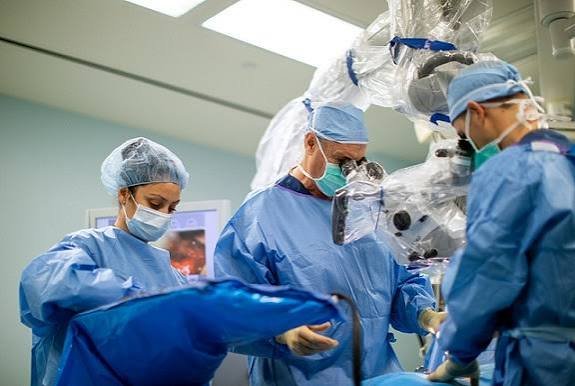
Bone Biologics Corporation (Nasdaq: BBLG, BBLGW) (“Bone Biologics” or the “Company”), a developer of orthobiologic products for spine fusion markets, announced that six hospital sites in Australia are now under agreement to participate in its first-in-human pilot clinical trial of NB1, the Company’s rhNELL-1-based bone graft product for spinal fusion. The expanded network doubles the number of participating centers and is expected to accelerate patient screening and surgical scheduling, strengthening the Company’s expectation to complete enrollment by year-end 2026.
NB1, the Company’s lead product candidate, combines the recombinant human NELL-1 protein (rhNELL-1) with demineralized bone matrix for use in spinal procedures.
“We believe the additional hospital sites in our study meaningfully increases our access to qualified patients and reduces our reliance on patient flow at any individual center,” said Bone Biologics CEO Jeff Frelick. “This expansion strengthens our anticipation of reaching full enrollment by the end 2026 and brings us closer to the 12-month follow-up data.”
Study design and endpoints
The pilot study is a multicenter, prospective, parallel-group, randomized trial conducted in Australia that evaluates the safety and preliminary effectiveness of NB1 in up to 30 adult subjects with degenerative disc disease (DDD) undergoing transforaminal lumbar interbody fusion (TLIF). Inclusion criteria include patients with DDD at one level from L2-S1 who may also have up to Grade 1 spondylolisthesis or Grade 1 retrolisthesis at the involved level. Primary clinical endpoints include fusion success at 12 and 24 months following surgery, and change from baseline in the Oswestry Disability Index, a standard measure of functional disability. The U.S. Food and Drug Administration’s Division of Orthopedic Devices previously reviewed the study design in a pre-submission, and these pilot study findings are intended to support progression to a pivotal clinical study in the United States.
“Supported by our cash runway through the second quarter of 2027 and our recently announced 32-month validated shelf life for rhNELL-1, we remain focused on disciplined execution of the NB1 clinical program as we prepare for a potential pivotal study,” added Frelick.






© 2026 Biopharma Boardroom. All Rights Reserved.