22 May 2026 | Friday | News
Vyriad, Inc., a clinical-stage biotechnology company developing targeted genetic therapies for cancer and other serious diseases, today announced the introduction of G-Link™, a first-in-class modular adaptor protein technology designed to enable and enhance T-cell-targeting delivery across in vivo and ex vivo CAR T workflows. Data presented at the 2026 American Society of Gene & Cell Therapy (ASGCT) Annual Meeting demonstrate how G-Link integrates with lentiviral systems to improve precision, efficiency and scalability without adding operational complexity.
"Many current strategies require complex redesigns or manufacturing processes that can create friction at the exact moment the field needs scalability. G-Link was created to remove those barriers and help partners move quickly in in vivo CAR T."
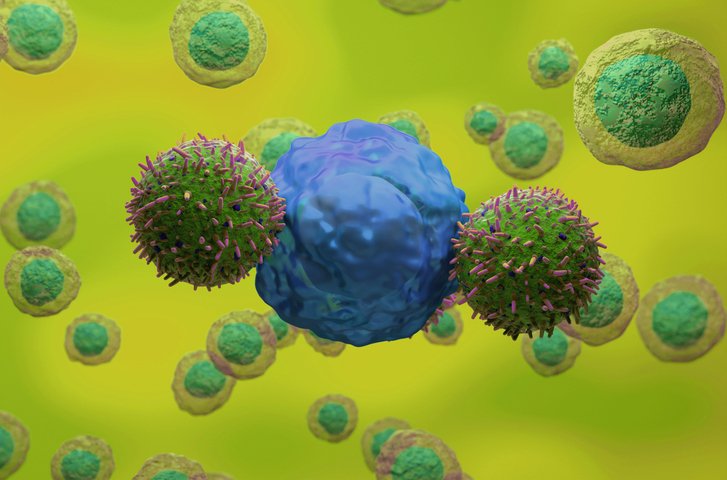
G-Link – developed in collaboration with Menachem Rubinstein of the Weizmann Institute – is a “plug-and-play” protein adaptor that builds on the established performance of vesicular stomatitis virus G glycoprotein (VSV-G)–pseudotyped lentiviral vectors (LVVs) by masking native low-density lipoprotein receptor (LDLR) tropism and retargeting delivery to CD3+ T cells without requiring complex vector redesign. Its trimeric architecture enables simultaneous engagement of the three protomers of VSV-G, enabling high-avidity attachment to the VSV-G protein and selective engagement of T cells and other cell types. Once internalized, the G-Link cap is released in the endosome, allowing normal membrane fusion and preserving vector function.
“This year’s ASGCT reinforced what much of the industry already recognizes — delivery remains one of the most significant barriers for in vivo CAR T, and there is growing demand for practical solutions that can accelerate innovation, but with simplicity,” said Dr. Luke Russell, executive vice president of Vyriad. “Many current strategies require complex redesigns or manufacturing processes that can create friction at the exact moment the field needs scalability. G-Link was created to remove those barriers and help partners move quickly in in vivo CAR T - and, at the same time, simplify ex vivo workflows.”
G-Link for In Vivo CAR T: Targeted Delivery Platform With No Reengineering
At ASGCT, preclinical data demonstrated that G-Link-capped lentiviral vectors carrying the same anti-BCMA CAR construct used in Vyriad’s lead in vivo clinical candidate VV169 — but pseudotyped with wild-type VSV-G — can generate functional CAR T cells in vivo with significant anti-tumor activity in an advanced OPM-2 human disseminated multiple myeloma xenograft model. The LVV leveraged a modified, T-cell-selective promoter within a reversed expression cassette to drive CAR expression in T cells and prevent incorporation into the viral envelope during packaging, reducing the risk of off-target transduction of malignant cells. Key findings from the study include:
Versatility of G-Link Beyond LVV-Based In Vivo Indications
In ex vivo settings, G-Link functions as a booster that enhances activation and transduction of T cells. When added alongside wild-type LVVs, G-Link enables efficient delivery without the need for T-cell sorting or activation steps. G-Link-capped LVVs were compared against engineered, CD3-targeted vectors for delivery of a CAR construct targeting human PSMA – an antigen highly expressed in prostate tumors – which found:
Adding to G-Link’s versatility, additional data presented demonstrates the platform’s ability to extend beyond lentiviral vectors and retarget Cas9-carrying engineered virus-like particles (eVLPs). In a β2-microglobulin knockout study, G-Link blinded LDLR-mediated entry of the eVLP systems while driving efficient, CD3-specific edits.
“The real opportunity with G-Link is the versatility it introduces at the development level,” said Dr. Kah-Whye Peng, chief technology officer of Vyriad. “It allows Vyriad and our partners to explore new targets and applications without being constrained by vector design, fundamentally accelerating how quickly and broadly we can move programs forward.”



© 2026 Biopharma Boardroom. All Rights Reserved.