18 May 2026 | Monday | Interaction
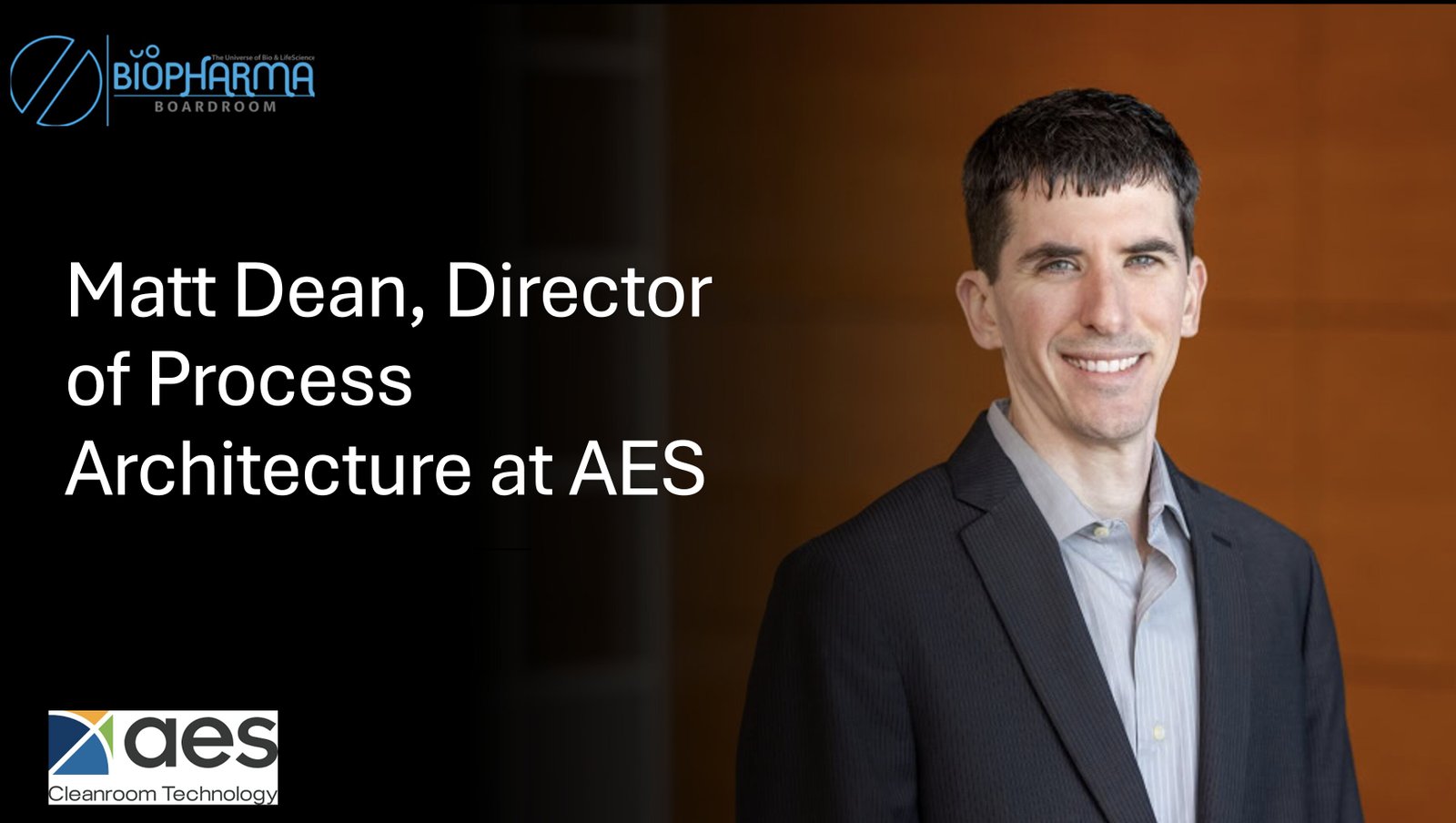
From advanced biologics and cell therapies to increasingly stringent regulatory expectations, today’s pharmaceutical manufacturing environments demand far more than traditional cleanroom infrastructure. Facilities must now deliver operational flexibility, contamination control, sustainability, and resilience — all while accelerating speed-to-market. In this exclusive interview, Matt Dean discusses how AES is helping manufacturers navigate these challenges through integrated process architecture, modular cleanroom solutions, and forward-looking facility strategies designed for the next era of biopharmaceutical production.
As AES marks its 40th anniversary, how have contamination control strategies evolved alongside the increasing complexity of biologics manufacturing?
Over the past 40 years, contamination control strategies have evolved in step with the growing complexity of biologics manufacturing. As the industry has expanded into novel, patient-based advanced therapeutics, including cell and gene therapies and highly sophisticated biosafety aspects, cleanrooms are now relied upon to support process containment requirements far beyond their original role in clean controlled environments.
Early cleanroom facilities were relatively standardized, designed to meet uniform requirements and expected to achieve any ISO classification level. Today, they are highly engineered, application-specific environments built to support sensitive, process-driven operations, reflecting the shift in higher performance and critical containment expectations. Cleanrooms are expected to meet far tighter parameters and maintain critical airflows, as even minor variations can impact product integrity and environmental safety in complex biologic systems. This new paradigm mirrors advances in drug development and underscores cleanrooms’ critical role in regulatory compliance, qualification and process validation.
The project delivery model for these environments has also changed. There has been a clear move away from isolated, standalone pre-set builds toward more coordinated project models, where design, end user requirements and compliance are integrated from the outset. AES has developed a strategic early planning program, CompassTM dedicating a team with specific expertise in this area. This allows for greater control, reliability and efficiency from the cleanroom infrastructure, which is particularly valuable as regulatory scrutiny increases with novel drug development.
The cleanroom, once a supporting infrastructure, is now viewed as a critical central component of modern, high-value pharmaceutical manufacturing operation.
What are the most common gaps you still see in cleanroom contamination control, even among advanced facilities?
Even among advanced facilities, the most common gaps in contamination control tend to stem from how complexity is managed in the project design phase and applied in practice. Many organizations are operating under increasing regulatory pressure while also trying to control costs and meet expected production capacity. They do not always have the in-house expertise needed to translate their complex process requirements into an end-to-end cleanroom infrastructure solution. That can lead to gaps between developing contamination control strategies and production operations, particularly as processes become more complex.
Another recurring issue is isolated cleanroom project delivery. When design, process development and compliance are handled in silos, it is harder to ensure a fully integrated facility. This lack of coordination can result in ineffective airflow design, gaps in cross-contamination strategies or unsuccessful process validation.
Timelines also play a role. As expectations for speed-to-market have increased, there is a risk that contamination control considerations are not adaptable for the life of the cleanroom. Cleanroom facilities may meet initial requirements but lack the flexibility to maintain control as processes evolve or diversify, increasing the risk of compliance drift over time.
In most cases, these gaps are not caused by a single issue but by a lack of a holistic approach to the cleanroom infrastructure planning. Without the right structure and oversight in place, even technically advanced facilities can fall short in long-term performance in contamination control.
How can manufacturers better balance operational efficiency with stringent regulatory requirements in facility design?
This balance starts with how facilities are designed and executed. One of the most effective ways manufacturers can achieve this is by implementing an integrated project model, where design, process operations and compliance requirements are incorporated at the project onset as part of a holistic solution. This sets accurate expectations from regulatory authorities early on , improves stakeholder alignment and allows project risks to be addressed earlier in the process.
The criticality of early cleanroom planning is heightened when considering operational efficiency with facility design. Leveraging our Process Architecture expertise, AES utilizes a holistic approach to the design process, working directly with key stakeholders and end users to identify operational constraints, regulatory requirements and integrate the process into the facility. This results in a clear design basis with full alignment between the process unit operations and the regulatory roadmap while optimizing for operational efficiency.
The AES modular cleanroom approach also play a key role for our clients, leveraging standardized system components, setting repeatable design elements and accelerating construction expectations. Installation durations can be reduced, accelerate speed-to-market and provide enhanced quality control. Modular systems offer the flexibility to scale or adapt as processes evolve and avoid constraints from the cleanroom.
Ultimately, efficiency and compliance are not competing priorities. When facilities are designed with regulatory compliance, flexibility and performance in mind, manufacturers are better positioned to meet both.
With supply chain disruptions still top of mind, how can manufacturers build more resilient and secure production ecosystems?
Building more resilient, secure production ecosystems starts with reducing complexity and increasing control throughout the facility lifecycle. As manufacturing becomes more advanced, ensuring resilience now goes beyond supply continuity and encompasses how quickly and effectively facilities can respond to change.
Modular cleanroom approaches are playing a key role here. They enable faster build times and more predictable delivery and help reduce exposure to supply chain delays during construction. Just as importantly, they provide the flexibility to scale or adapt facilities as requirements evolve, without major disruption.
Reducing reliance on fragmented supplier models is another critical step. When multiple vendors are involved across design, engineering and delivery, coordination can be challenging, increasing the risk of delays and inconsistencies. More integrated, end-to-end approaches address this by improving alignment and accountability, creating a more stable and reliable delivery process.
There is also a growing focus on lifecycle design, which directly supports long-term resilience. By designing facilities with future adaptation in mind, manufacturers can respond more effectively to changing process needs. Supported by digital tools that enhance monitoring and control, this approach ensures facilities remain secure, efficient and responsive over time.
Looking ahead, what emerging technologies or approaches will most significantly reshape cleanroom and manufacturing efficiency strategies?
Looking ahead, sustainability will be one of the most influential forces shaping cleanroom and manufacturing efficiency strategies. With increasing ESG expectations and regulatory pressure, there is a clear shift toward reducing the environmental impact of cleanrooms, which are typically among the most energy-intensive parts of a facility.
This is driving greater adoption of lifecycle-focused design approaches. Manufacturers are evaluating how facilities perform over time, with an emphasis on long-term efficiency, adaptability and reduced operational intensity. Modular cleanrooms are central to this, offering more efficient construction, less waste and the flexibility to adapt without major reconstruction.
Additionally, digital technologies and smart systems are becoming more embedded in cleanroom environments. Enhanced monitoring, data visibility and control allow manufacturers to optimize performance in real time, improving both efficiency and compliance.
More broadly, there is a continued move toward innovation in how facilities are designed and delivered, alongside expansion into new sectors where controlled environments are becoming increasingly important.
These trends point toward a future in which cleanrooms deliver higher performance and greater efficiency while remaining adaptable to evolving manufacturing demands.




© 2026 Biopharma Boardroom. All Rights Reserved.