04 February 2026 | Wednesday | Interaction

As regulators worldwide intensify scrutiny of per- and polyfluoroalkyl substances (PFAS), laboratories are being pushed into a new era of sensitivity, speed, and scale. In this BioPharma BoardRoom interview, Craig Butt, PhD—an environmental safety expert with more than two decades of PFAS research experience—explains how evolving EU regulations under the Water Framework Directive are accelerating the adoption of automation, pre-concentration techniques like solid-phase extraction (SPE), and high-end mass spectrometry. Bridging analytical innovation with public-health relevance, Butt offers a clear-eyed view of how better PFAS data can drive smarter environmental decisions and ultimately reduce human exposure.
How will tighter EU PFAS regulations change laboratory testing requirements over the next few years?
We are seeing regulations evolve across the globe — in the US, EU, Japan, and elsewhere. Since 2000, the Water Framework Directive (WFD) has been the driving force for water protection in Europe.
To read more about its timeline, see: Surface water - Environment - European Commission.
As surface water regulations are approved, labs will need to measure PFAS levels far below those for drinking water. Most likely this will require a pre-concentration sample preparation approach (i.e. SPE concentration). High‑end mass spectrometers, advanced filtration technologies, and new sample‑prep methods will become even more critical.
What role will automation and pre-concentration techniques like SPE play in meeting ultra-low detection limits?
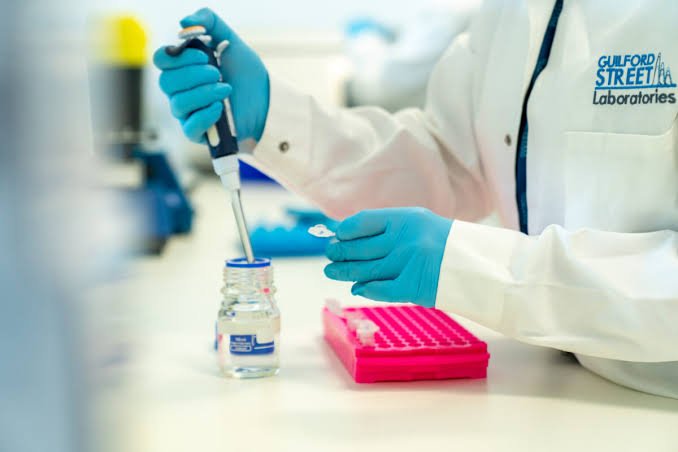
Automation is critical for labs to increase productivity and efficiency. It can speed up sample preparation, reduce background contamination, improve precision and accuracy, and minimize human error. As automation systems evolve, they can handle more complex workflows and support higher‑throughput testing demands.
How can better PFAS data translate into clearer public-health and environmental decision-making?
Understanding the overall occurrence, fate, and movement of PFAS is essential to developing strategies for reducing our exposure. For example, we need to understand which matrices are more important for exposure (for example, drinking water, food, air, and consumer products such as personal care products). Once we understand which matrices are most contaminated, rigorous testing can inform us as to how they became contaminated and how we can clean them up.
In addition, thorough human biomonitoring. we can identify general PFAS levels in the population and if certain groups have higher levels, and therefore, higher health risks.
We are also seeing new PFAS identified. Growing interest in monitoring ultra-short chain PFAS shows that there is plenty more to be discovered.









© 2026 Biopharma Boardroom. All Rights Reserved.