04 May 2026 | Monday | Interview
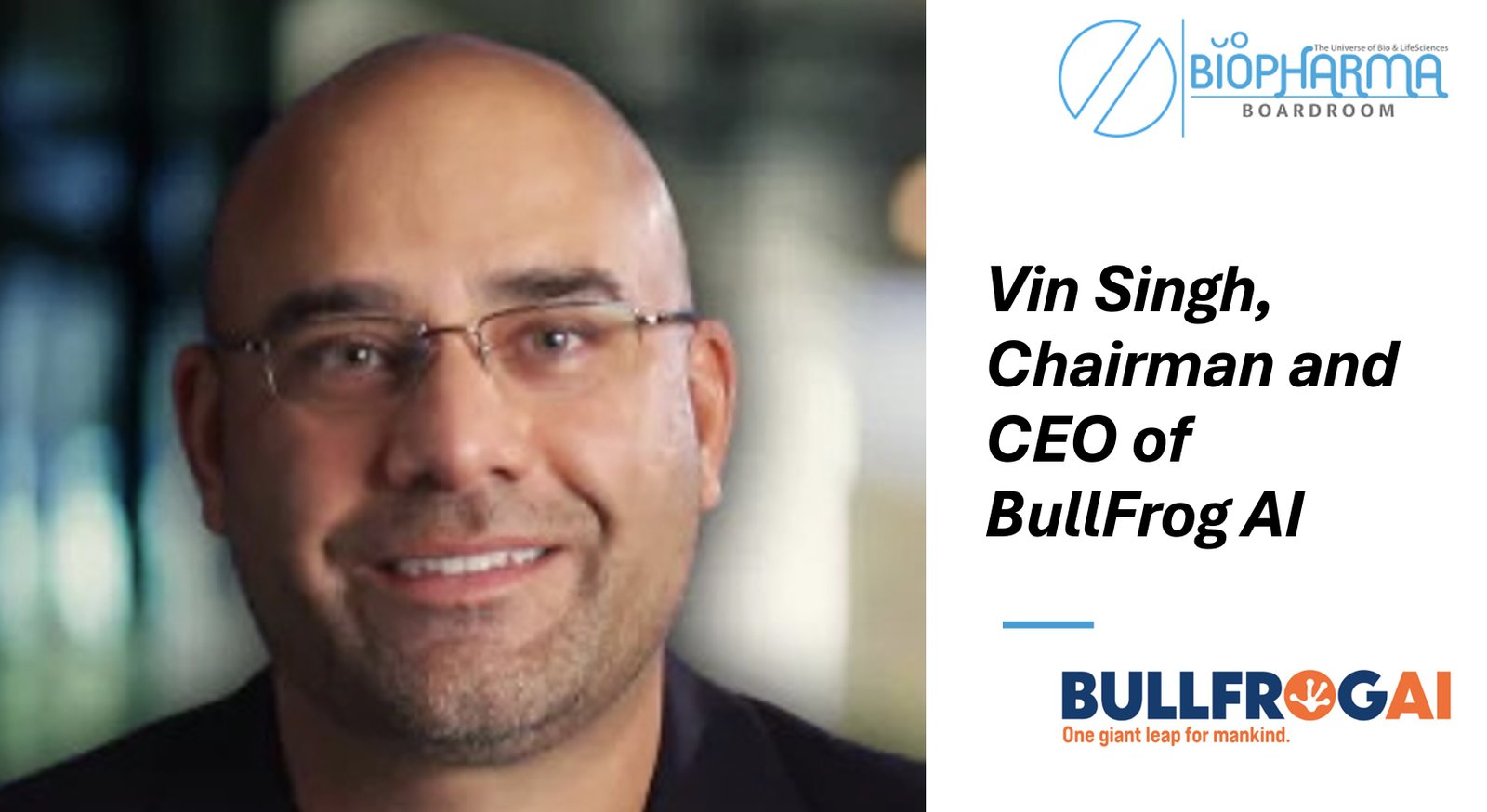
As pharmaceutical companies continue to face high attrition rates, rising development costs and increasingly complex clinical datasets, the industry is searching for more predictive approaches to drug discovery and development. In this exclusive Q&A with Biopharma Boardroom, Vin Singh, Chairman and CEO of BullFrog AI, explains how the company’s causal AI platform is helping biopharma organizations transform fragmented clinical and real-world data into actionable insights that support target identification, patient stratification and more efficient clinical development strategies. From optimizing drug–patient compatibility to uncovering new opportunities for shelved assets, Singh outlines how BullFrog AI is positioning itself at the forefront of a more data-driven and predictive drug development ecosystem.
Failure rate of drugs in clinical development remains one of the most persistent challenges in drug development. From your perspective, what are the key limitations of traditional data analysis approaches that BullFrog AI is aiming to overcome?
Traditional models often fail in clinical development due to inadequate data or inadequate tools for preparing and analyzing the data that many companies in this industry already have. The fact of the matter is that all AI is not created equal and there are incredibly complex datasets that are just not prepared for ingestion into AI models. Well structured, AI-ready multimodal data is needed to uncover the kind of game changing insights that will grant clinical researchers access to the type of detailed nuance that enables them to make the right decisions. Ultimately leading to clinical success. Unfortunately, that critical data can be complicated to collect or cost prohibitive to many of the small or microcap companies that are searching for that kind of insight. As technology continues to evolve, and platforms like BullFrog’s AI data preparedness tool bfPREP™ become widely used in the industry, these types of barriers will become less of a hurdle.
BullFrog AI emphasizes working with “messy” clinical and real-world data. Could you elaborate on how your platform structures and extracts actionable insights from such complex datasets, and what differentiates your approach from conventional AI models?
When BullFrog AI started, the focus was on validating the core causal AI approach and proving it could deliver insights that traditional methods could not. Over time, we’ve significantly expanded the platform’s capabilities, improved performance, and refined how insights are delivered to end users. We’ve also deepened the platform’s biological focus, ensuring it is purpose-built for life sciences rather than adapted from general analytics tools by customizing and focusing our AI models and associated tools.
A lot of traditional models use what is called correlation-based machine learning. Correlations show relationships and patterns whereas causal AI provides the magnitude and direction of those relationships. The main difference between the two, especially in complex biological systems, is causal AI can provide an understanding of the drivers of disease, as well as the associated pathways, which can be crucial to making discoveries that will lead to successful drugs developed in less time and for less investment. We want to provide more insight beyond just identifying correlations, relationships, or patterns, and that’s what BullFrog’s end-to-end workflow is designed to provide.
In terms of messy data, we recognized that a lot of companies just don’t have their data in a good enough place to make AI analysis successful. Based on some of our initial partnerships, we recognized that companies sometimes had data all over the place, on multiple servers, in different formats, sometimes even with clinical notes scribbled on a notepad and scanned in as a PDF. This problem led to the design of our solution, bfPREP™, which is designed to clean, harmonize, and structure biological and clinical data so it can be analyzed using AI tools.
Many AI-driven drug discovery companies focus on molecule generation. How does BullFrog AI’s focus on drug–patient compatibility shift the paradigm, and what impact can this have on late-stage trial success rates?
You are correct that many AI-driven companies are focused on drug design. That’s not our space. By using advanced ML-driven causal modeling to identify high-potential drug targets, reduce false positives, and generate actionable insights from complex omics and clinical datasets, we can identify the best targets, decrease their traditional discovery/development timelines, and cut back on the number of candidates that will fail before reaching approval. Our partners can then proceed with their drug screening activities knowing that they are working with targets that have a high potential of association with a disease.
In addition, our technology can identify optimal patient populations based on molecular signatures, predicted response, and real-world data, helping partners design precision trials and assist in patient stratification. Using these predictive analytics to flag high-risk trial variables, reveal confounding factors, and suggest adaptive trial designs, our clinical partners can lower trial failure risk and enhance their clinical ROI. This is especially important for smaller biotech companies where you can only really afford to fund one lead clinical target.
You recently announced a commercial agreement with a top 5 global pharmaceutical company in major depressive disorder. Can you share more about how BullFrog AI’s platform is being applied in this collaboration and what outcomes you aim to achieve?
Absolutely. We’re very excited about the agreement to identify and prioritize therapeutic targets for that pharma partner specifically in major depressive disorder (MDD). This will be our first partnership since the launch of our bfARENAS™ defensible decisions platform that completes our end-to-end analytical AI workflow. The potential to uncover key targets that could help future patients in a disease like MDD, which is ranked as the third leading cause of disease burden worldwide by the World Health Organization, is something we are intensely focused on. Under the agreement, we will be using our causal AI platform to identify and prioritize novel drug targets specifically for MDD, accelerating the partner’s drug discovery and clinical development program for this indication. The outcomes and deliverables from the partnership will be prioritized drug target candidates, associated causal gene networks, and target dossiers for advancement-ready drug candidates to accelerate their pipeline. Ultimately, we want to determine the best candidates to pursue for the indication so the best treatments can be streamlined to reach patients faster.
There is growing interest in repurposing or reviving shelved assets. How does your AI workflow help identify new opportunities for previously unsuccessful or deprioritized compounds?
As you mentioned earlier, the failure rate of drugs in clinical development remains one of the most persistent challenges in drug development. Expanding the life cycle of an existing pipeline often involves identifying new therapeutic uses. With bfLEAP®’s advanced analytical capabilities, the platform can unearth potential expansion opportunities for existing drugs. By analyzing mechanistic overlaps and patient subtypes most likely to benefit, our platform can uncover new indications for already approved or shelved compounds and open new revenue streams or release new promising candidates from within your pipeline that otherwise would remain shelved.
Looking ahead, how do you see AI evolving in the clinical development space over the next 3–5 years, and what role do you expect BullFrog AI to play in shaping a more predictive and efficient drug development ecosystem?
Looking ahead, our goal is to continue innovating and expanding the impact of the bfLEAP® platform across drug discovery and development. That includes deeper engagement in central nervous system (CNS) disorders, where unmet needs are high, and success rates are low, as well as expanding into additional therapeutic areas.
We see no shortage of opportunities to apply our platform and causal AI capabilities to the challenges facing the pharmaceutical industry. We are being recognized as an AI innovator with unique know-how and capabilities that should translate into AI partnerships across the entire drug discovery and development workflow, disease categories, and drug modalities. Ultimately, the long-term goal is to help improve drug development success rates, reduce costs, and bring better therapies to patients faster, saving and extending lives through better treatment. That mission continues to guide every strategic decision we make.



© 2026 Biopharma Boardroom. All Rights Reserved.