FDA recognition positions Cytiva among the first gene therapy technology providers to receive Advanced Manufacturing Technology designation, enabling a clearer regulatory pathway while reducing encapsidated host cell DNA by up to 99% in AAV production.
-
The FDA AMT designation recognizes technologies that demonstrate the potential to significantly improve the quality, reliability, and robustness for advanced therapy manufacturing.
-
Customers benefit from earlier and more frequent engagement with the FDA helping to address technical and regulatory considerations earlier in the process.
-
The ELEVECTA transient cell line reduces encapsidated host cell DNA by up to 99% compared to commercially available cell lines.
Cytiva, a Danaher company and a global leader in life sciences, received an advanced
manufacturing technology (AMT) designation for its ELEVECTA transient cell line for adeno-associated virus (AAV) manufacturing, one of the first gene therapy manufacturing technologies to receive the designation. Customers using the ELEVECTA transient cell line will benefit from a clear, predictable regulatory and quality framework for gene therapy development.
The FDA’s AMT designation recognizes drug manufacturing technologies that elevate the reliability, quality, and robustness of advanced therapeutics manufacturing. By enabling a streamlined Chemistry, Manufacturing, and Controls (CMC) review and frequent communication with the FDA, the AMT designation can help accelerate manufacturing-related development timelines and create a meaningful advantage through faster time to market. Unlike other FDA designations, the AMT designation is granted independently of any specific application.
Beate Mueller-Tiemann, Chief Technology Officer, Cytiva, says: “The FDA’s AMT designation underscores a meaningful shift in how AAV therapies are developed, recognizing the ELEVECTA transient cell line for its high quality profile regarding encapsidated host cell DNA. It also reflects Cytiva's investment in innovative cell line technologies, including ELEVECTA stable producer cell lines, for which the same host cell line serves as underlying technology. In combination these innovations bring more opportunities to the development of AAV therapies in a broader range of indications.”
Why this matters for AAV manufacturing
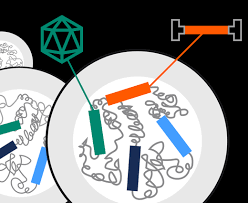
Residual host cell DNA (hcDNA) is a critical quality attribute in AAV manufacturing that requires careful monitoring and control. Non-therapeutic DNA fragments, particularly those encapsidated within viral particles, represent a process‑related impurity that can impact product consistency and purity. However, once hcDNA is packaged inside the capsid, it cannot be effectively removed through downstream purification, making it a persistent challenge. As a result, effective control of encapsidated hcDNA relies primarily on upstream process design and optimization to minimize its incorporation during vector production, rather than post‑production clearance strategies.
The ELEVECTA transient cell line addresses this challenge at its source through advanced cell line engineering designed to significantly reduce the formation and encapsidation of host cell DNA (hcDNA). In Cytiva studies, encapsidated hcDNA was reduced by up to 99% versus commercially available cell lines, supporting a stronger product quality profile and alignment with emerging regulatory expectations for residual DNA control. This innovation is further recognized through the FDA’s Advanced Manufacturing Technology (AMT) designation, enabling a more streamlined, predictable development pathway that helps reduce friction across the manufacturing lifecycle.
Emmanuel Abate, President, Genomic Medicine, Cytiva says: “The FDA’s AMT designation for the ELEVECTA transient cell line gives our customers a clearer and more predictable path to adopting advanced AAV manufacturing technologies. The platform is designed to support a strong product quality profile, including significantly reduced levels of encapsidated host cell DNA. This establishes a clear path for AAV therapy development, helping teams mitigate risk and progress programs with greater confidence.”