18 May 2026 | Monday | News

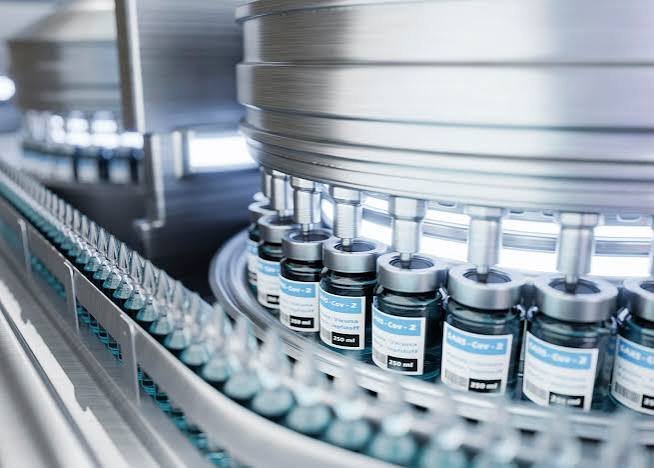
-ImmunityBio, Inc. (NASDAQ: IBRX), a commercial-stage immunotherapy company, today announced an exclusive U.S. Development and Supply Agreement with Japan BCG Laboratory ("JBL"), the Tokyo-based developer and manufacturer of the Tokyo strain of BCG (Tokyo-172 BCG). The agreement provides ImmunityBio exclusive U.S. rights to develop, import, and commercialize intravesical Tokyo-172 BCG.
JBL's Tokyo strain of BCG is supported by the February 2026 positive Phase III readout of SWOG S1602, a randomized Phase III study sponsored by the National Cancer Institute (NCI), which demonstrated non-inferiority of the Tokyo strain of BCG to TICE BCG in BCG-naïve high-grade non-muscle invasive bladder cancer (NMIBC). The pre-specified non-inferiority margin was a hazard ratio of 1.34 (hazard ratio 0.82; 95.8% CI 0.63–1.08). The Tokyo strain of BCG is investigational in the United States and has not been approved by the FDA.
Dr. Patrick Soon-Shiong will discuss the JBL agreement and provide updates on ImmunityBio’s efforts to expand BCG access and advance research in the BCG-naïve setting during his presentation, “The Role of IL-15 in the Urological Setting,” at the American Urological Association Annual Meeting on May 16, 2026 at 1:30 EDT. The presentation will also highlight the role of IL-15 in urological oncology, including mechanisms driving T cell and natural killer (NK) cell activation, current clinical evidence, and emerging combination approaches in bladder and prostate cancer. A livestream of the presentation will be available through the 2026 AUA Annual Meeting website.
“For more than 70 years, Japan BCG Laboratory has been dedicated to the development and manufacture of high-quality BCG products,” said Seiichi Inoue, President of Japan BCG Laboratory. “We are pleased to partner with ImmunityBio to bring the Tokyo strain of BCG to patients in the United States, and we look forward to supporting ImmunityBio in its engagement with the FDA.”
ImmunityBio plans to engage with the FDA to pursue U.S. approval of the Tokyo strain of BCG and will lead all regulatory submissions, clinical development, and commercialization in the United States as the sole BLA applicant. Upon any approval, ImmunityBio will be the sole Marketing Authorization Holder. The Tokyo strain of BCG has been used in Japan for almost 30 years for the treatment of high-risk NMIBC.
SWOG S1602 (NCT03091660) is a Phase III randomized controlled trial that enrolled 1,000 patients (984 eligible) between February 2017 and December 2020 with BCG-naïve high-grade NMIBC, randomized 1:1:1 to intravesical TICE BCG (n=330), intravesical Tokyo-172 BCG (n=327), or intradermal priming, followed by intravesical Tokyo-172 BCG (n=327). The pre-specified non-inferiority margin for the primary endpoint of high-grade recurrence-free survival (HGRFS) was a hazard ratio of 1.34.
At a median follow-up of 4.6 years, results presented at the February 2026 ASCO Genitourinary Cancers Symposium (Svatek RS, et al. J Clin Oncol. 2026;44[7 suppl]:LBA629) demonstrated non-inferiority of intravesical Tokyo strain of BCG versus intravesical TICE BCG on the primary endpoint of HGRFS (HR 0.82; 95.8% CI 0.63–1.08), with the upper confidence bound well below the pre-specified non-inferiority margin of HR 1.34. Complete response (CR) in carcinoma in situ (CIS) at 6 months was 66.4% (Tokyo) versus 70.2% (TICE). Progression-free survival was similar across arms. The estimated 5-year HGRFS was 64% in the Tokyo arm, 58% in the TICE arm.
ImmunityBio is in discussions with the SWOG Cancer Research Network, the NCI, and Fred Hutchinson Cancer Research Center to establish a Data Use Agreement that would allow incorporation of the S1602 data into the company's planned BLA submission.
“SWOG and the National Cancer Institute have our deep respect for designing and completing SWOG S1602, a randomized controlled trial of approximately one thousand patients in BCG-naïve high-grade NMIBC that took nearly a decade to read out,” said Patrick Soon-Shiong, M.D., Founder, Executive Chairman and Global Chief Scientific and Medical Officer of ImmunityBio. “S1602 is the kind of rigorous, publicly funded science that should inform FDA decision-making. Its non-inferiority finding for the Tokyo strain of BCG, alongside our rBCG partnership with Serum Institute and the FDA-approved use of ANKTIVA® with BCG in BCG-unresponsive disease, points to a future where U.S. patients with bladder cancer will have the supply and the treatment options they need.”
With the JBL agreement, ImmunityBio now has a second potential BCG source for the United States. The Company's ongoing partnership with Serum Institute of India, one of the world's largest vaccine manufacturers, supports the supply of recombinant BCG (rBCG), an investigational product. ImmunityBio will continue its FDA Expanded Access Program (EAP) for rBCG, so eligible patients can receive treatment while the regulatory path for the Tokyo strain of BCG moves forward. Taken together, the two partnerships aim to give U.S. urologists and their patients a more reliable BCG supply.
“U.S. urologists and their patients have lived with a chronic BCG shortage for more than a decade,” said Richard Adcock, President and Chief Executive Officer of ImmunityBio. “This agreement with Japan BCG Laboratory for the Tokyo strain of BCG gives ImmunityBio a second potential BCG source for the United States. We plan to work with the FDA on the regulatory path for the Tokyo strain of BCG. In the meantime, through our ongoing partnership with the Serum Institute of India, rBCG remains available to eligible patients through our FDA Expanded Access Program."
ANKTIVA is approved by the FDA in combination with BCG for the treatment of adult patients with BCG-unresponsive NMIBC with carcinoma in-situ (CIS), with or without papillary tumors. ImmunityBio expects to provide further updates on the U.S. regulatory pathway for the Tokyo strain of BCG, including the timing of pre-FDA interactions and any anticipated BLA submission, in future communications.



© 2026 Biopharma Boardroom. All Rights Reserved.