Collaboration targets lentiviral gene transfer and precise gene editing in hematopoietic stem cells to accelerate translation, manufacturability, and global patient access
- New “Danaher Beacon,” first in the European Union, aims to accelerate translation, scalability, and reliability across cell and gene therapy workflows
- Focus is on lentiviral gene transfer and targeted gene editing of hematopoietic stem cells
Cytiva, a Danaher company and a leader in the life sciences industry, together with the San Raffaele Telethon Institute for Gene Therapy (SR-TIGET), launched a new collaboration to advance next generation genomic medicine platforms. Established under Danaher Beacons—long term strategic research collaborations between Danaher companies and worldclass academic institutions—the initiative aims to help researchers and developers address some of the most persistent bottlenecks in cell and gene therapy, targeting high-impact areas where even small gains can meaningfully help move from discovery to delivery faster.
SR-TIGET – a joint venture between Ospedale San Raffaele and Fondazione Telethon, an Italian non-profit organization committed to advancing research for rare genetic diseases – aims to expand access to innovative tools for translational researchers who want to scale promising genomic technologies faster and more reliably. The new collaboration will combine the scientific leadership of SR-TIGET with Cytiva’s manufacturing expertise, spanning process development through commercialization, with additional partnership from two other Danaher companies, Aldevron and Integrated DNA Technologies (IDT). It will operate under the umbrella of Danaher Beacons, long- term, strategic research collaborations between Danaher companies and world-class academic
institutions. SR-TIGET is currently the only research center in the European Union designated as a Danaher Beacon.
Scientific excellence throughout the workflow
Professor Luigi Naldini, MD, PhD and Director of SR-TIGET says: “For more than two decades, we have advanced gene therapies based on hematopoietic stem cells. Today SR-TIGET is recognized as a global leader in the field with the number of patients treated and diseases addressed, as well as of products approved for the EU and/or US market. More importantly, these treatments have been safe and truly transformative for our patients. The next challenge is to ensure that the new therapies that we are developing together with Fondazione Telethon can be brought to clinical testing and delivered to patients in a more robust, scalable, and economically sustainable way than is currently possible. Through this collaboration, we aim to combine our scientific expertise with Cytiva’s technologies to help make that possible.”
Daria Donati, Chief Scientific Officer for Genomic Medicine at Cytiva, says: “Together, Danaher and SR-TIGET share a clear ambition: to accelerate the translation of promising genomic technologies into therapies that can be delivered reliably, reproducibly, and at scale. The Beacon reflects a long-term commitment to building the foundational platforms required for genomic medicine to fulfill its promise—not just in pioneering trials, but for patients worldwide.”
Why this matters
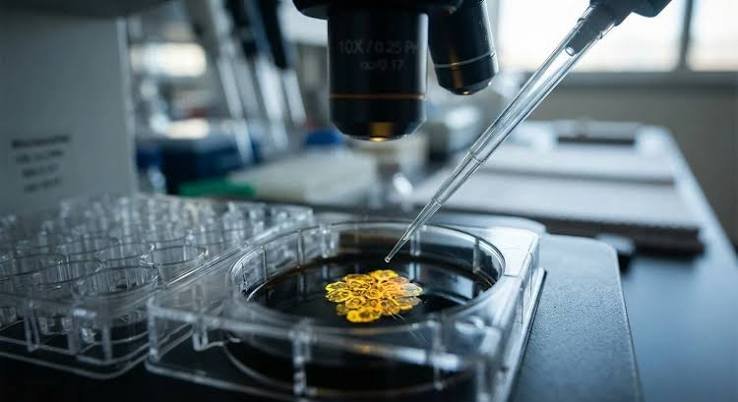
As more cell and gene therapies move into clinical pipelines, with 2,130 clinical trials in progress in 2025 1 alone, developers face increasing pressure to optimize processes, improve consistency, reduce costs, and accelerate timelines. The Cytiva-SR-TIGET initiative will prioritize high-impact areas where even modest advances can meaningfully accelerate translation and improve manufacturability – in particular the optimization of lentiviral vector production and advancement of homology – directed repair-based gene editing in hematopoietic stem cells, with a focus on automation of cell manipulation and process improvement.
The work will extend for several years as part of Cytiva’s broader effort to strengthen its genomic medicine portfolio and support innovators across the biotech ecosystem.