05 August 2026 | Wednesday | News
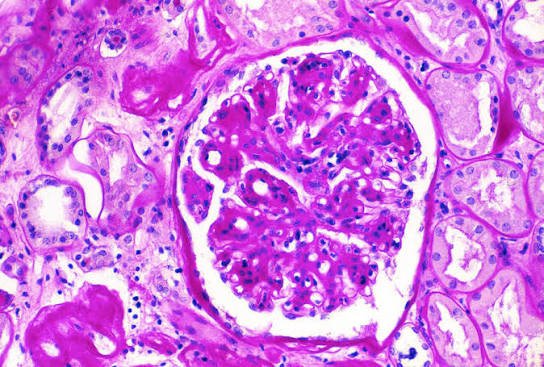
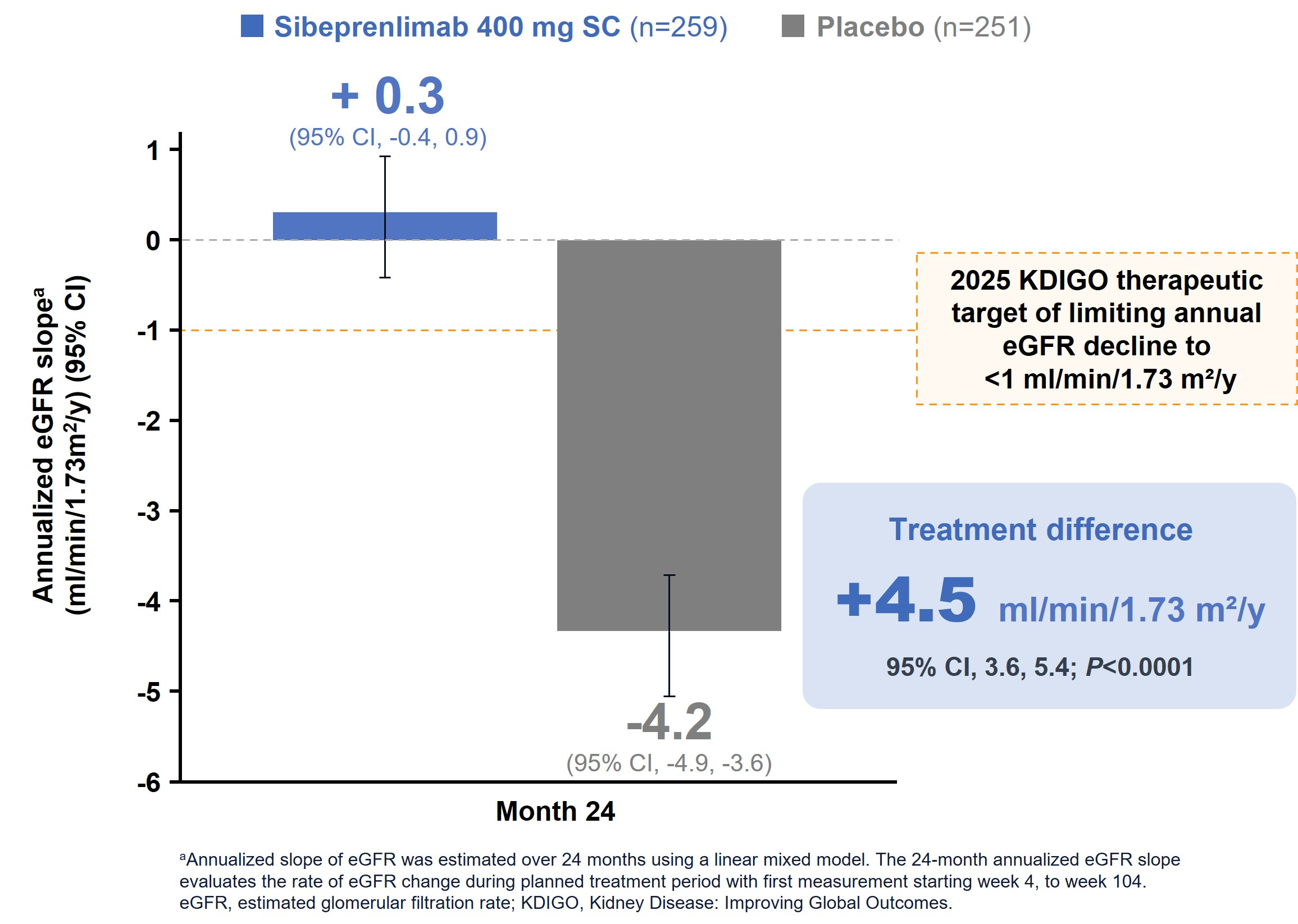
-Otsuka Pharmaceutical Development & Commercialization, Inc. and Otsuka Pharmaceutical Co., Ltd. (Otsuka) announced new data from the Phase 3 VISIONARY trial demonstrating that VOYXACT® (sibeprenlimab-szsi) stabilizes estimated glomerular filtration rate (eGFR) returning kidney function decline to baseline physiologic rate over two years (24 months) in adults with primary IgA nephropathy (IgAN) at risk for disease progression. Results presented during a late-breaking oral presentation at the GlomCon Hawaii 2026 conference showed the study achieved its key secondary endpoint, with an annualized eGFR slope of +0.3 (95% CI, -0.4 to 0.9) mL/min/1.73 m²/year with sibeprenlimab versus -4.2 (95% CI, -4.9 to -3.6) mL/min/1.73 m²/year with placebo, demonstrating a statistically significant treatment effect of +4.5 (95% CI, 3.6 to 5.4; p<0.0001) mL/min/1.73 m²/year at two years (24 months). VOYXACT is the first IgAN treatment to achieve the KDIGO therapeutic goal of effectively halting progressive kidney function decline to physiologic rate (<1 mL/min/1.73 m²/year for most adults)1. The overall safety profile of sibeprenlimab remained consistent through two years (24 months) and was comparable to placebo, with similar rates of overall adverse events (90.7% vs 90.0%), infections and infestations (51.4% vs 51.0%), and injection site reactions (35.1% vs 32.2%). No new safety signals were identified, and rates of serious infections were lower with sibeprenlimab than placebo (1.9% vs 4.0%), alongside lower rates of serious and severe adverse events and treatment discontinuations. A complete analysis of the Phase 3 VISIONARY two-year (24-month) results will be presented at an upcoming scientific congress.
“For nephrologists, stabilization of kidney function in IgAN patients represents a major advancement in the clinical management of this disease," said Dr. Dana Rizk, professor of medicine in the division of nephrology at the University of Alabama at Birmingham and VOYXACT VISIONARY study site principal investigator and co-chair of the steering committee. “The VISIONARY two-year eGFR results achieved the KDIGO treatment goal of reducing kidney function decline to near physiological level, fundamentally altering the disease progression. The magnitude and consistency of benefit across pre-specified sub-groups, coupled with the reassuring safety profile of VOYXACT, delivers new hope for better long-term outcomes in patients living with this progressive condition.”
The annualized eGFR slope (the study's key secondary endpoint) was estimated using a prespecified linear mixed-effects model that evaluated repeated eGFR measurements from Week 4 through Week 104 (24 months) to estimate the annual rate of kidney function change. At two years (24 months), the least square mean change from baseline in eGFR showed +1.3 mL/min/1.73 m² with sibeprenlimab (95% CI, −0.3 to 2.8), compared with −7.9 mL/min/1.73 m² with placebo (95% CI, −9.5 to −6.4), for a treatment difference of +9.2 mL/min/1.73 m² (95% CI, 7.1 to 11.4; p<0.0001). The least square mean change from baseline in eGFR at two years (24 months) was evaluated as a complementary secondary endpoint and was analyzed using a Mixed Model for Repeated Measures (MMRM) to assess the overall difference in kidney function from study entry to the two-year (24-month) timepoint.
“The VISIONARY trial provides the largest Phase 3 study in IgAN, with 24 months of follow-up in a broad, representative, patient population reflective of real-world clinical practice,” said John Kraus, M.D., Ph.D., executive vice president and chief medical officer, Otsuka. “These transformative results deliver the largest treatment effect reported in a Phase 3 IgAN trial, with a magnitude of benefit demonstrating stabilization of kidney function and halting of disease progression beyond symptom management, with the potential to redefine the treatment landscape. These data add to the body of evidence supporting selective APRIL inhibition as a safe, durable and disease-modifying therapeutic approach that targets underlying IgAN drivers.”
Otsuka would like to thank the patients, families, advocates, and investigators who participated in the Phase 3 VISIONARY trial, and who continue to advance IgAN research with the shared goal and persistent pursuit of delivering breakthroughs on patients' behalf.
VOYXACT is the first-and-only U.S. FDA-approved selective A-PRoliferation-Inducing-Ligand (APRIL) inhibitor, offering an early, targeted therapy that addresses key drivers of IgAN to alter disease progression2. VOYXACT was granted accelerated approval by the U.S. FDA in November 2025 after meeting the Phase 3 VISIONARY study's primary endpoint of statistically significant proteinuria reduction compared to placebo at nine months. VOYXACT was well tolerated, with a favorable safety profile comparable to placebo. The two-year eGFR results build on previously observed reductions in Gd-IgA1, proteinuria, and hematuria, underscoring VOYXACT’s ability to modify the disease and improve long-term clinical outcomes in IgAN2. These new findings complete the Phase 3 VISIONARY study dataset, marking another milestone in Otsuka’s rolling submission of a supplemental Biologics License Application (sBLA) to the U.S. FDA for VOYXACT traditional approval.





© 2026 Biopharma Boardroom. All Rights Reserved.