23 June 2026 | Tuesday | Interaction | By editor@biopharmboardroom.com

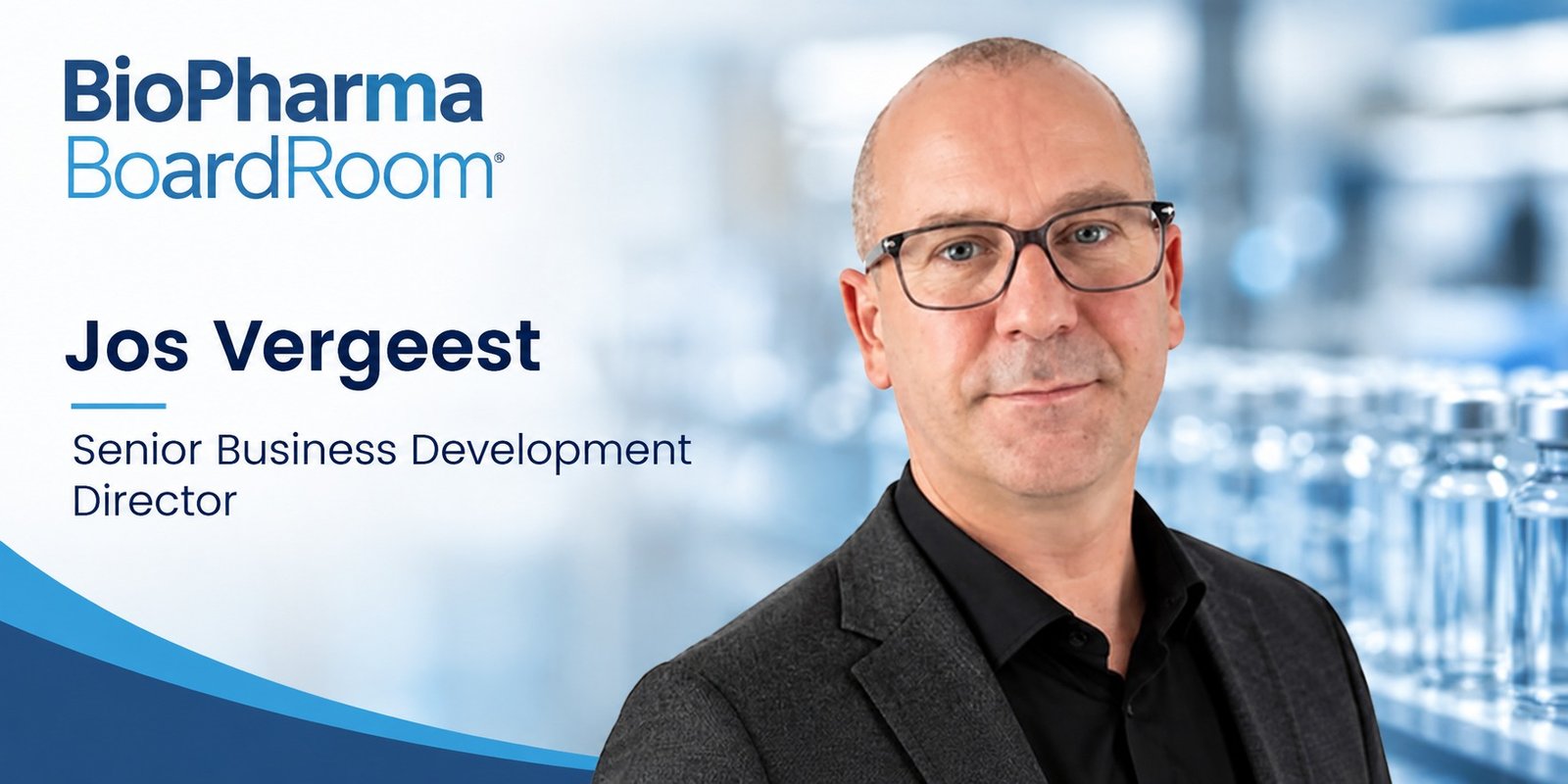
How CDMO partnerships are evolving for a new generation of complex therapies 53Biologics has built its reputation around accelerating biologics development and manufacturing. What differentiates your approach from traditional CDMO models in today’s competitive market?
What differentiates 53Biologics is not only the breadth of our capabilities, but the way we work with clients. Traditional CDMO models can be highly structured and sequential, which may be appropriate for mature, well-defined programs. However, biologics development is rarely linear, particularly for early-stage or technically complex assets.
Our model is built around scientific proximity, agility and shared accountability. We engage closely with clients from the earliest stages of development, adapting as new data emerges and helping teams make informed decisions quickly. By combining microbial and mammalian development, process development, GMP manufacturing, analytical services and fill-finish capabilities within a single organization, we can provide continuity throughout the product lifecycle.
Rather than trying to be everything to everyone, we focus on being a highly responsive, technically driven partner for biologics programs that require rapid execution and direct access to experienced scientific teams.
As demand for complex biologics continues to grow, what trends are you seeing across monoclonal antibodies, recombinant proteins, and next-generation biologic therapies?
We are seeing two important trends emerge simultaneously. Monoclonal antibodies remain a dominant therapeutic class, but developers are increasingly seeking more efficient development pathways, stronger CMC strategies and scalable manufacturing solutions from the outset.
At the same time, the biologics landscape is becoming far more diverse. Recombinant proteins, enzymes, nanobodies, fusion proteins and other engineered biologics are gaining momentum, many of which present unique development and manufacturing challenges that do not fit standard platform approaches.
We are also seeing growing demand for critical enabling materials, including plasmid DNA, recombinant enzymes and ancillary materials used in advanced therapy manufacturing. As modalities become more sophisticated, successful development increasingly depends on partners that understand both the underlying science and the practical realities of industrial-scale manufacturing. Early manufacturability assessment and development flexibility are becoming essential to keeping programs on track.
Speed to clinic remains a critical priority for emerging biotech companies. How is 53Biologics helping clients shorten development timelines without compromising quality?
Speed to clinic is about eliminating unnecessary complexity and avoiding preventable delays. At 53Biologics, we accelerate timelines by integrating development, analytical, manufacturing and quality considerations from the beginning of a program. Too often, these activities are treated as separate workstreams, creating inefficiencies and costly rework later. We focus on connecting those decisions early so that each stage is designed with the next milestone in mind.
Our organizational structure enables rapid project initiation, direct access to technical experts and continuous communication throughout execution. By providing process development, manufacturing, QC and fill-finish capabilities under one roof, we can also reduce the number of external handoffs that often slow progress.
Importantly, quality remains non-negotiable. Our objective is to move programs forward faster while ensuring that development decisions are supported by robust science and a clear path to GMP readiness.
What manufacturing and process development challenges are most common among early-stage biotech innovators, and how does your team help address them?
Many early-stage biotech companies are founded on excellent science but have limited experience translating a promising molecule into a manufacturable product.
Common challenges include low or inconsistent expression, limited process robustness, incomplete analytical characterization, uncertainty around critical quality attributes, scale-up risk and insufficient documentation to support future GMP activities. For recombinant proteins in particular, purification often becomes a major hurdle when aggregation, stability issues or product-related impurities emerge during development.
Our role is to introduce manufacturing, quality and regulatory thinking early, without slowing innovation. We help clients assess manufacturability, identify technical risks, establish realistic development priorities and build processes that can evolve as programs mature.
Rather than simply executing predefined activities, we work alongside clients to understand the molecule, the target product profile and the key development milestones ahead. That collaborative approach helps transform promising research into a robust and scalable biologics program.
How are advances in automation, digital technologies and data-driven process optimization reshaping biologics manufacturing in 2026?
Automation and digitalization are increasingly fundamental to modern biologics manufacturing. Their greatest impact lies in their ability to connect data across development and manufacturing functions.
Improved data capture and integration allow organizations to understand process performance earlier and make more informed decisions during scale-up and technology transfer. In process development, data-driven approaches can accelerate optimization of fermentation, cell culture, purification and analytical workflows. Within GMP operations, digital systems enhance traceability, documentation, deviation management and process monitoring.
Artificial intelligence (AI) will also play a growing role, particularly in predictive analytics and process optimization. However, its value depends on strong scientific oversight and rigorous quality systems. For CDMOs, the key challenge is adopting these technologies in a practical way that improves efficiency and robustness while maintaining regulatory confidence.
Regulatory expectations continue to evolve globally. How is 53Biologics supporting clients in preparing robust CMC and manufacturing strategies for regulatory success?
Regulatory success begins long before a submission is prepared. It starts with developing a strategy that aligns with the product’s stage of development and the intended regulatory pathway.
We support clients by helping define quality target product profiles, identify critical quality attributes, develop fit-for-purpose analytical methods, generate process knowledge and establish documentation that meets GMP expectations. For emerging companies in particular, one of the most valuable contributions we can make is helping them avoid early-stage decisions that may create comparability, scalability or regulatory challenges later.
Our support extends across process characterization, technology transfer, QC planning, batch documentation and GMP manufacturing readiness. We take a practical, risk-based approach, helping clients generate the right evidence at the right stage of development so they can progress efficiently while maintaining confidence with regulators and investors.
What are clients prioritizing most today when selecting a CDMO partner: technical expertise, flexibility, speed, scalability or strategic collaboration?
All of these factors matter, but their relative importance depends on the program’s stage and complexity. For emerging biotechnology companies, speed and flexibility are often critical because development milestones and financing timelines are closely linked. However, speed only creates value when it is supported by strong technical expertise and rigorous quality standards.
As programs advance, scalability, manufacturing reliability and regulatory readiness become increasingly important. What we are seeing across the industry is a shift away from viewing CDMOs simply as providers of capacity. Clients are looking for partners that can contribute strategically and adapt as programs evolve.
That ability to combine technical depth with a highly engaged partnership model is becoming a key differentiator, particularly for complex biologics programs where development pathways are rarely straightforward.
Looking ahead, what opportunities do you see emerging in the biologics sector, and what key milestones should the industry watch from 53Biologics over the next 12–18 months?
The most exciting opportunities are emerging from the increasing diversity and complexity of biologic modalities. Recombinant proteins, advanced antibody formats, complex microbial products, plasmid DNA and enabling materials for advanced therapies all require development and manufacturing partners capable of combining scientific agility with robust GMP execution.
We are also seeing growing demand for European manufacturing capacity, more resilient supply chains and integrated development-to-manufacturing support. Companies want partners that can help maintain momentum as programs move from early development into clinical production.
For 53Biologics, the next 12–18 months will focus on strengthening our position as a science-driven CDMO dedicated to biologics development and manufacturing. Key milestones include the planned expansion of our mammalian manufacturing capacity and continued enhancement of our fill-finish capabilities, both of which will broaden the ways we can support clients throughout the product lifecycle.
At the same time, we will continue investing in integrated service delivery and automation to improve efficiency, traceability and decision-making. Our goal remains simple: helping clients keep their programs moving forward with confidence, even as scientific and manufacturing challenges become more complex.


© 2026 Biopharma Boardroom. All Rights Reserved.