31 March 2026 | Tuesday | News
REVEAL-1 met the primary endpoint of Q4W proptosis responder rate (PRR) with a highly statistically significant treatment effect -
- Elegrobart Q4W and Q8W achieved clinically meaningful 54% and 63% PRR versus 18% placebo at week 24 -
- Complete resolution of diplopia in 51% of patients treated Q4W versus 16% placebo at week 24 -
- Elegrobart was generally well tolerated in both dose groups with low rates of hearing impairment -
- REVEAL-2, a phase 3 clinical trial evaluating elegrobart in patients with chronic TED, is on track for topline readout in Q2 2026; BLA submission anticipated in Q1 2027 -
- Viridian ended Q4 2025 with $875 million in cash; the company anticipates existing cash, potential near-term milestones from its 2025 royalty agreement, and anticipated commercial revenues from veligrotug and elegrobart if approved, to fund current business plans through profitability -
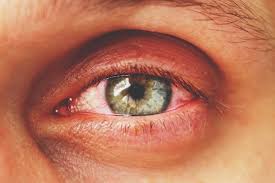
Viridian Therapeutics, Inc. (Nasdaq: VRDN), a biotechnology company focused on discovering, developing, and commercializing potentially best-in-class medicines for serious and rare diseases, announced positive topline data from the elegrobart REVEAL-1 phase 3 clinical trial in patients with active thyroid eye disease (TED). Elegrobart is a subcutaneously delivered, half-life-extended monoclonal antibody targeting the insulin-like growth factor-1 receptor (IGF-1R). REVEAL-1 evaluated two dosing regimens, every four weeks (Q4W) and every eight weeks (Q8W), compared with placebo.
“We are excited to report these results from REVEAL-1, the largest pivotal clinical trial conducted in active TED to date, which position elegrobart as potentially the first ever subcutaneous autoinjector treatment for TED,” said Steve Mahoney, President and Chief Executive Officer of Viridian Therapeutics. “REVEAL-1 met its primary endpoint with high statistical significance. Elegrobart treatment drove robust proptosis responses in a treatment regimen comprised of as few as three subcutaneous doses. Further, in the Q4W arm, we saw clinically meaningful diplopia responses and diplopia resolution. Currently, the only marketed treatment for TED requires eight intravenous infusions and, despite low market penetration, annualized in 2025 to approximately $2B in revenues. We believe there is a significant opportunity with subcutaneous elegrobart in TED, including the potential to expand the market as an at-home and self-administered treatment option, if approved.”
“Subcutaneous elegrobart showed rapid and clinically meaningful reductions in proptosis and diplopia in REVEAL-1 with a highly convenient, well-tolerated dosing profile,” said Prem Subramanian, MD, PhD, professor of ophthalmology at Colorado University Anschutz, and chief of neuro-ophthalmology at the Sue Anschutz-Rodgers Eye Center. “Patients are seeking more treatment choices for TED, and there remains a clear need for a more conveniently administered therapy. I am very encouraged to see the data for elegrobart and believe it has the potential to reach more TED patients than an intravenous therapy and to provide them with an attractive treatment option.”
Elegrobart REVEAL-1 Phase 3 Topline Results
REVEAL-1 assessed the efficacy and safety of subcutaneous Q4W or Q8W elegrobart versus placebo in patients with active TED. The study enrolled 132 patients, randomized 1:1:1 to elegrobart Q4W (n=44), elegrobart Q8W (n=44), and placebo (n=44).
REVEAL-1 Efficacy
REVEAL-1 was highly statistically significant on its primary endpoint of Q4W proptosis responder rate and the key secondary endpoint of Q4W proptosis mean change from baseline, each at week 24 as measured by exophthalmometry. REVEAL-1 also assessed elegrobart Q8W versus placebo and additional clinically relevant endpoints for both the Q4W and Q8W dosing arms. Detailed results are presented below:
|
Elegrobart (n = 44 per arm) |
Placebo (n = 44) |
p-value |
|||
|
Primary |
Q4W |
FDA: Proptosis responder rate (exophthalmometry) |
54% |
18% |
p < 0.0001* |
|
EMA: Overall responder rate (ORR) |
51% |
16% |
p = 0.0001* |
||
|
|
|
|
|||
|
Key |
Q4W |
Proptosis mean change from baseline (exophthalmometry) |
-2.33 mm |
-0.81 mm |
p < 0.0001* |
|
Clinical activity score (CAS) reduction to 0 or 1 |
57% |
50% |
p = 0.24 |
||
|
Diplopia responder rate |
71% |
32% |
p = 0.0009 |
||
|
Diplopia complete resolution |
51% |
16% |
p = 0.0013 |
||
|
Q8W |
Proptosis responder rate (exophthalmometry) |
63% |
18% |
p < 0.0001 |
|
|
EMA: Overall responder rate (ORR) |
58% |
16% |
p < 0.0001 |
||
|
Proptosis mean change from baseline (exophthalmometry) |
-2.50 mm |
-0.81 mm |
p < 0.0001 |
||
|
Clinical activity score (CAS) reduction to 0 or 1 |
69% |
50% |
p = 0.03 |
||
|
Diplopia responder rate |
54% |
32% |
p = 0.05 |
||
|
Diplopia complete resolution |
28% |
16% |
p = 0.14 |
||
|
|
|
|
|
|
|
|
Other |
Q4W |
Proptosis responder rate (MRI) |
50% |
2% |
p < 0.0001 |
|
Proptosis mean change from baseline (MRI) |
-2.04 mm |
-0.22 mm |
p < 0.0001 |
||
|
Q8W |
Proptosis responder rate (MRI) |
36% |
2% |
p < 0.0001 |
|
|
Proptosis mean change from baseline (MRI) |
-1.99 mm |
-0.22 mm |
p < 0.0001 |
||
|
* Statistically significant. Key secondary endpoints below Q4W “CAS Reduction to 0 or 1” in the prespecified testing hierarchy and other secondary endpoints are nominally significant if below the statistically significant threshold of 0.025. |
|||||
REVEAL-1 Safety
Elegrobart was generally well-tolerated with a safety profile consisting of adverse events generally expected from the anti-IGF-1R class, the vast majority of which were mild. Rates of hearing impairment were low in both the Q4W and Q8W treatment arms (11.3% and 2.3% placebo-adjusted rates, respectively), and all reports were of tinnitus, none of which were associated with reductions in hearing.
Elegrobart on Track with a BLA Submission anticipated in Q1 2027
Veligrotug on Track with a PDUFA Target Action Date of June 30, 2026
Conference call and webcast information
Viridian will host a conference call today at 8:00 a.m. ET to discuss the REVEAL-1 topline data. The dial-in number for the conference call is (800) 715-9871 for domestic participants and +1 (646) 307-1963 for international participants. The conference ID is 7373356.
A live webcast of the conference call can be accessed through the “Events” page in the Investors section of the Viridian Therapeutics website. Following the live webcast, an archived version of the call will also be available on the website.
About Viridian Therapeutics
Viridian is a biopharmaceutical company focused on discovering, developing, and commercializing potential best-in-class medicines for patients with serious and rare diseases. Viridian’s expertise in antibody discovery and protein engineering enables the development of differentiated therapeutic candidates for validated drug targets and disease-driving mechanisms in autoimmune and rare diseases.
Viridian is advancing multiple late-stage, anti-insulin-like growth factor-1 receptor (IGF-1R) candidates in the clinic for the treatment of patients with thyroid eye disease (TED). The company conducted a pivotal program for veligrotug, including two global phase 3 clinical trials (THRIVE and THRIVE-2), to evaluate its efficacy and safety in patients with active and chronic TED. Both THRIVE and THRIVE-2 reported positive topline data, meeting the primary and all secondary endpoints of each study. Viridian is also advancing elegrobart as the potential first subcutaneous autoinjector for the treatment of TED, including two ongoing global phase 3 pivotal clinical trials, REVEAL-1 and REVEAL-2, to evaluate the efficacy and safety of elegrobart in patients with active and chronic TED.
In addition to its IGF‑1R inhibitor portfolio, Viridian is developing an anti–thyroid‑stimulating hormone receptor (TSHR) program designed as a potential therapy for TED and Graves’ disease.
Viridian is also advancing a novel portfolio of neonatal Fc receptor (FcRn) inhibitors, including VRDN-006 and VRDN-008, which have the potential to be developed in multiple autoimmune diseases.





© 2026 Biopharma Boardroom. All Rights Reserved.