17 April 2026 | Friday | News
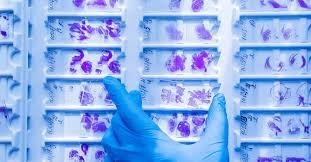
PacBio (NASDAQ: PACB), a leading developer of high-quality, highly accurate sequencing solutions, and Covaris, a PerkinElmer company and leader in sample preparation technologies, announced a joint workflow has been developed for robust HiFi sequencing of formalin-fixed, paraffin-embedded (FFPE) tissue samples. The protocol will be formally presented at the upcoming American Association for Cancer Research (AACR) Annual Meeting. This solution integrates Covaris’ truXTRAC® FFPE extraction technology with PacBio’s Kinnex™ library preparation and sequencing on the Revio system, delivering a streamlined workflow from sample to sequencing.
FFPE samples are among the most abundant and clinically relevant sources of biological material, particularly in oncology research. However, DNA damage and fragmentation caused by fixation have historically limited their compatibility with long-read sequencing. The combined Covaris–PacBio workflow is designed to help address these challenges, enabling researchers to generate high-quality HiFi sequencing data from archived tumor samples.
The workflow leverages Covaris’ Adaptive Focused Acoustics® (AFA)-based truXTRAC FFPE extraction method to recover longer DNA fragments, up to 5,000 base pairs, from FFPE tissues. PacBio’s Kinnex library preparation concatenates these fragments into longer molecules suitable for HiFi sequencing, improving efficiency and data quality.
In studies across brain, kidney, and uterine tumor samples, the workflow produced more than 100 million HiFi reads per sample, with mean read lengths of 750–1,500 base pairs. The data enabled detection of over 11,000 structural variants and more than 5 million small variants per sample, with approximately 60% phased into haplotypes. By comparison, short-read sequencing of FFPE tissue typically detects 3,000–7,000 structural variants per sample, less than half the yield achieved here, due to limitations in spanning complex rearrangements and repetitive regions. Notably, while short-read approaches produce comparable small variant counts, their shorter read lengths generally limit the ability to directly phase variants into haplotypes, often requiring statistical inference or specialized library methods. As a result, the approximately 60% direct phasing achieved with this workflow represents a distinctive and potentially clinically meaningful advantage of long-read HiFi sequencing.
“This collaboration reflects our shared commitment to advancing genomic research through innovative, integrated solutions,” said Annemarie Watson, CEO of Covaris. “By combining our proven AFA-based extraction technology with PacBio’s sequencing expertise, we are enabling researchers to unlock valuable insights from even the most challenging FFPE samples, helping accelerate discoveries in cancer biology and beyond.”
“What’s so exciting about this workflow is that it opens up vast archives of banked samples for HiFi sequencing on the Revio and Vega systems,” said Dave Miller, Vice President of Global Marketing at PacBio. “With SPRQ-Nx enabling a significantly lower cost per genome, clinical researchers can revisit these samples to uncover structural variation, phase mutations, and resolve complex genomic regions that have remained out of reach with short-read sequencing, ultimately accelerating progress in oncology.”
The combined workflow demonstrates consistent performance across diverse tissue types and varying DNA quality, enabling comprehensive genomic profiling, including structural variant detection and somatic mutation phasing. By unlocking FFPE samples for HiFi sequencing, PacBio and Covaris are helping transform underutilized archives into powerful datasets: enriching the context and scale of data available for AI-driven discovery and enabling new biological findings that were previously out of reach.









© 2026 Biopharma Boardroom. All Rights Reserved.