11 June 2026 | Thursday | News

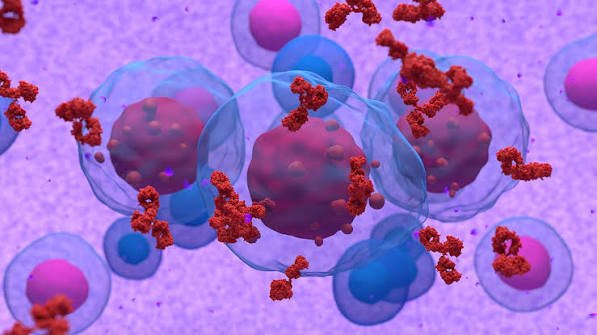
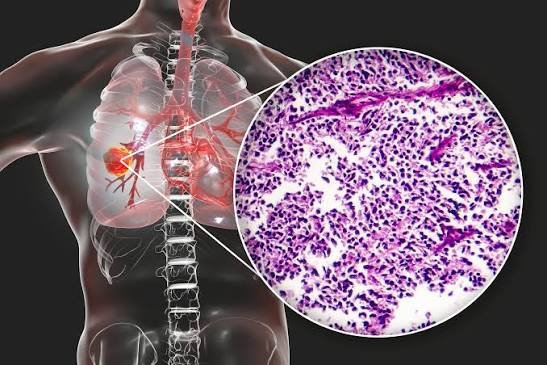
The Lung Cancer Research Foundation (LCRF), in collaboration with AstraZeneca, announced that two research awards focused on improving outcomes for people with small cell lung cancer (SCLC) are now open for investigator submissions.
Given how early we remain in unraveling the biology of SCLC, and that existing treatments are rarely curative, there is a pressing need for innovative therapeutic strategies aimed not merely at prolonging survival, but at achieving cure.
Advances in disease understanding and treatment are frequently shaped and accelerated by patient advocacy. Sustained advocacy efforts have driven meaningful progress across a range of conditions, including HIV/AIDS, breast cancer, and Alzheimer's disease. Yet despite lung cancer's status as the leading cause of cancer-related death in the United States, it carries the lowest advocacy score among major diseases.4 A primary obstacle has been the persistent stigma surrounding lung cancer, which has historically impeded the mobilization of patients, caregivers, and the broader public. Against this backdrop, given the slow pace of research and clinical development in SCLC specifically, building a robust advocacy infrastructure for this patient population is not merely desirable, but critically overdue.
The 2026 LCRF | AstraZeneca Research Award on Strategies Towards Improving the Treatment of Small Cell Lung Cancer is a $500,000, three-year award that will focus on furthering the development of novel strategies towards improving the treatment of SCLC. Work supported through this mechanism will address important areas of need across the entire care continuum and have the immediate potential to increase survivorship. It is expected that correlative translational research will be proposed that will enhance the understanding of SCLC.
The 2026 LCRF | AstraZeneca Research Award on Strategies Using Patient Advocacy to Improve Outcomes in Small Cell Lung Canceris a $250,000, two-year award that will focus on furthering the development of strategies towards improving the outcomes of SCLC patients through patient advocacy. Work supported through this mechanism will address important areas of need across the entire care continuum and have the immediate potential to increase research efforts, quality of life and survivorship.
Submissions for both mechanisms will be reviewed through a two-step process: Letters of Intent will be accepted until midnight on July 15, 2026; if selected, investigators will then be chosen to submit full proposals, subject to rigorous review by LCRF's Scientific Advisory Board.
"A deeper understanding of small cell lung cancer biology is essential to advancing more precise and effective therapies—and ultimately improving care and outcomes for people living with this challenging disease," explains Nabil Chehab, US Medical Head, Lung Cancer, AstraZeneca. "We are thrilled to open these awards to the scientific community and look forward to the innovative research proposals investigators will bring forward. Together with the Lung Cancer Research Foundation, we are eager to accelerate the next wave of discoveries that will move small cell lung cancer science forward for patients."
"LCRF's research program is centered on delivering solutions for patients with lung cancer, and we couldn't be more excited to invite investigators to submit their most ambitious ideas," says Dr. Antoinette Wozniak, Chief Scientific Officer for LCRF. "SCLC has long been one of the most urgent and underserved challenges in oncology, patients still face inevitable treatment resistance and very limited options, yet emerging insights into SCLC subtypes and targets are opening doors that were closed just a few years ago. Patients are our partners in discovery, and with AstraZeneca's support, we are ready to champion both the novel therapeutic research and the patient advocacy strategies that will make a real and lasting difference for this community."
"SCLC remains one of the most difficult cancers to treat. Patients respond well initially, but resistance is nearly universal and our options at that point are still far too limited," remarks Misty Dawn Shields, MD, PhD, Assistant Professor, Indiana School of Medicine and Indiana University Simon Comprehensive Cancer Center. "Investments like the 2026 LCRF | AstraZeneca Research Awards are exactly what this field needs right now, when emerging science around SCLC subtypes and novel targets is finally giving us new directions to pursue. This kind of research can be the difference between a promising idea sitting on the shelf and a discovery that actually reaches patients."
More details about each of the Requests for Proposal, along with eligibility, requirements, and deadlines can be found at LCRF.org/FundingOpportunities.
|
1. |
Horn L, Mansfield AS, Szczęsna A, et al. N Engl J Med. 2018; 379(23): 2220-2229.↩ |
|
2. |
Paz-Ares L, Dvorkin M, Chen Y, et al. Lancet. 2019; 394(10212): 1929-1939.↩ |
|
3. |
Cheng Y, Spigel D, Cho BC, et al. N Engl J Med. 2024; 391(14): 1313-1324.↩ |
|
4. |
Best RK. Oxford University Press. 2019; 10.1093/oso/9780190918408.001.0001.↩ |






© 2026 Biopharma Boardroom. All Rights Reserved.