16 June 2026 | Tuesday | News
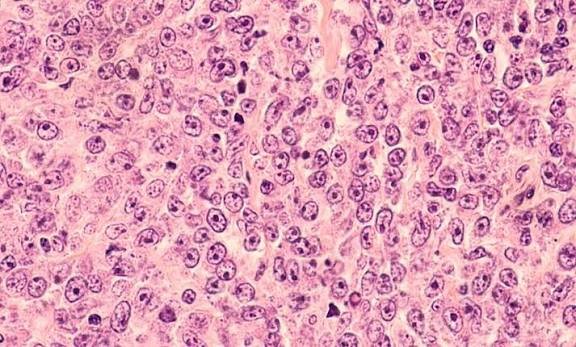
Genmab A/S (Nasdaq: GMAB) today announced new data from two studies evaluating epcoritamab, a T-cell engaging antibody administered subcutaneously, in the first-line (1L) treatment of patients with diffuse large B-cell lymphoma (DLBCL) who may have limited treatment options due to advanced age or multiple health conditions. Results from the Phase 2 EPCORE® DLBCL-3 study showed an overall response rate (ORR) of 67% and a complete response (CR) rate of 58% with epcoritamab monotherapy in elderly patients with newly diagnosed DLBCL. In the Phase 1b/2 EPCORE NHL-2 study, epcoritamab plus rituximab plus dose-attenuated cyclophosphamide, doxorubicin, vincristine, and prednisone (R-mini-CHOP) demonstrated an ORR of 93% and a CR rate of 86% in elderly patients with newly diagnosed DLBCL.
The results from both studies were presented in two poster presentations (abstracts PS2082 and PF1007) at the European Hematology Association (EHA) 2026 Congress held in Stockholm, Sweden, June 11-14. Additionally, the full EPCORE DLBCL-3 results have been simultaneously published in The Lancet Haematology.
EPCORE DLBCL-3 Results
The Phase 2 EPCORE DLBCL-3 study (abstract PS2082) evaluated the efficacy and safety of fixed-duration epcoritamab monotherapy in newly diagnosed CD20+ large B-cell lymphoma (LBCL) patients ineligible for anthracycline-based chemotherapy due to age (≥80 years) or comorbidities (≥75 years with comorbidities). Among 66 enrolled patients, the median age was 82.5 years, and all had comorbid conditions (94% with ≥3 comorbidities). With a median follow-up of 21.9 months, epcoritamab monotherapy demonstrated responses in this population with high unmet medical need.
An ORR of 67% and a CR rate of 58% were observed in evaluable patients (n=66). Median time to response was 1.5 months, and median time to CR was 2.2 months. Notably, 11 of 17 patients with a partial response or stable disease at first assessment subsequently achieved a CR.
"For newly diagnosed elderly patients with diffuse large B-cell lymphoma and comorbidities, who are often excluded from standard curative chemotherapy and ineligible for doxorubicin, finding more options is paramount," said Umberto Vitolo, M.D. Candiolo Cancer Institute, FPO-IRCCS, Candiolo (Turin), Italy. "The EPCORE DLBCL-3 study showed that epcoritamab monotherapy offers robust data. Importantly, its safety profile, including cytokine release syndrome and immune effector cell–associated neurotoxicity syndrome, was consistent with expected rates in this fragile population with a high unmet medical need for new therapeutic options."
Responses were durable, with median duration of response (DOR) and duration of complete response (DOCR) not reached. At 12 months, an estimated 67% of responses and 73% of CRs remained ongoing. Median progression-free survival (PFS) was 13.0 months, while median overall survival (OS) was not reached; an estimated 43% of patients remained progression-free and 62% were alive at 18 months. High rates of minimal residual disease (MRD) negativity were observed, with 92% of evaluable responders achieving MRD negativity, typically by Cycle 3 Day 1 and sustained through Cycle 12 Day 1 in most patients.
The safety profile was consistent with expected rates in this elderly population. Cytokine release syndrome (CRS) occurred in 71% of patients, most commonly during Cycle 1, and immune effector cell-associated neurotoxicity syndrome (ICANS) occurred in 18%. Infections of any grade occurred in 68% of patients (26% Grade ≥3), and neutropenia was reported in 16%, with no febrile neutropenia or clinical tumor lysis syndrome observed. Eight Grade 5 TEAEs occurred.
EPCORE NHL-2, Arm 8 Results
Arm 8 of the Phase 1b/2 EPCORE NHL-2 study (abstract PF1007) evaluated epcoritamab plus R-mini-CHOP in 28 newly diagnosed CD20+ DLBCL patients ineligible for full-dose R-CHOP due to age (≥75 years) or comorbidities (≥65 years with comorbidities). With more than two years of follow-up, fixed-duration epcoritamab plus R-mini-CHOP demonstrated high response rates, sustained MRD negativity and durable remissions.
An ORR of 93% and a CR rate of 86% were observed. Median DOR, DOCR, PFS, and OS were not reached. At two years, estimated DOR and DOCR rates were 79%, while estimated PFS and OS rates were 76% and 82%, respectively.
“The EPCORE NHL-2 Arm 8 results are very encouraging, showing that combining epcoritamab with R-mini-CHOP led to high overall response rates and complete response rates, rapid and sustained minimal residual disease negativity, and durable remissions in this population,” said David Belada, M.D., Department of Internal Medicine—Haematology, Charles University, Hospital and Faculty of Medicine, Hradec Králové, Czech Republic. “These outcomes, alongside a consistent safety profile, potentially support the integration of epcoritamab with standard of care for these vulnerable patients, and highlight its broad utility in combinations across a range of disease settings and patient populations."
Rapid and sustained MRD negativity was observed, with 95% of evaluable patients achieving MRD negativity, including high rates in high-risk subgroups. Outcomes compared favorably with historical results for R-mini-CHOP alone.
The safety profile was consistent with prior reports and the known safety profiles of epcoritamab and R-mini-CHOP. The most common Grade ≥3 treatment-emergent adverse events (TEAEs) were neutropenia (54%), serious infections (33%) and anemia (14%). Most Grade ≥3 serious infections occurred during the first six cycles of treatment with R-mini-CHOP coadministration. TEAEs led to epcoritamab discontinuation in three patients (11%).
“Genmab is committed to evaluating epcoritamab as a potential treatment option in earlier lines of therapy for patients who traditionally struggle with aggressive treatment," said Dr. Judith Klimovsky, Executive Vice President and Chief Development Officer of Genmab. "The robust data observed in both the monotherapy and combination approaches reinforce our vision of making epcoritamab a foundational therapy across the spectrum of B-cell malignancies. These Phase 2 results support our ongoing commitment to addressing the significant unmet medical needs of elderly and comorbid patients, as we seek to identify effective, less intensive and tolerable options."





© 2026 Biopharma Boardroom. All Rights Reserved.